


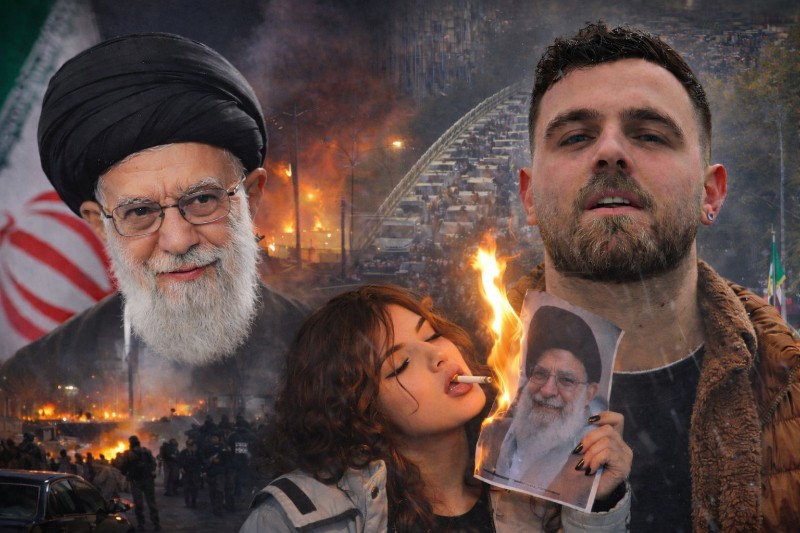
 Iran
Iran
Why are progressive voices silent on Iran’s massacre while they rally for Palestine?
Nationwide anti-government protests in Iran have entered their third week, emerging from economic grievances to sustained calls for systemic change and an end to theocratic rule.
According to the Human Rights Activists News Agency (HRANA), the death toll has climbed to at least 2,571 people, including over 2,400 protesters, with 18,100+ arrests reported across the country’s 31 provinces.
Iran Human Rights (IHRNGO), a Norway-based, non-partisan and politically independent organisation, has reported that at least 3,428 protesters have been killed and thousands more injured during 18 days of nationwide anti-government unrest in Iran.
According to IHRNGO, sources within Iran’s Ministry of Health and Medical Education confirmed that between January 8 and January 12 alone, authorities registered the deaths of at least 3,379 protesters, highlighting the scale of the crackdown.
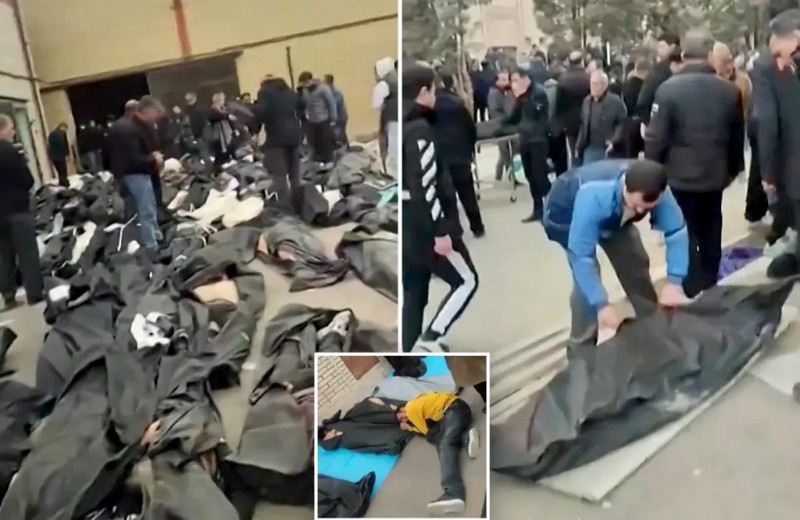 Iran Human Rights (IHRNGO) has claimed that at least 3,428 people have been killed in 18 days of anti-government nationwide protests in Iran. Photo: X/@MarioNawfal
Among the fatalities are at least twelve children and nine non-protesting civilians amid widespread disruption and violent crackdowns by security forces.
Communication blackouts imposed by Iranian authorities have hindered independent verification, but intermittent restoration of phone and partial internet services has allowed some eyewitness accounts to reach global news agencies.
Many demonstrations include graffiti and chants targeting Supreme Leader Ayatollah Ali Khamenei, reflecting broad anti-establishment sentiment.
Liberal voices: Passionate for Palestine, silent on Iran?
Amid these developments, a growing chorus of activists and commentators is condemning what they see as a striking and hypocritical silence from many self-identified progressive and left-liberal voices.
These observers note that while liberal public figures, social media activists, and human rights advocates have been vociferous in their support for Palestinian causes and criticism of Western governments, there has been comparatively muted engagement with the unfolding human rights catastrophe in Iran.
Iranian-American activist Masih Alinejad publicly criticised the Western left for “ideological silence,” arguing that prominent liberal commentators have not shown equivalent outrage toward the Iranian regime’s violent repression.
Social media discussions have amplified this critique, questioning why global progressives rally loudly for some struggles but remain “strangely silent” when the victims are Iranians confronting theocratic oppression and state violence.
'Selective outrage'
As global liberal circles remain largely muted on Iran’s bloodiest uprising in decades, a growing number of commentators from the Muslim world and diaspora are openly condemning what they describe as selective morality and ideological hypocrisy.
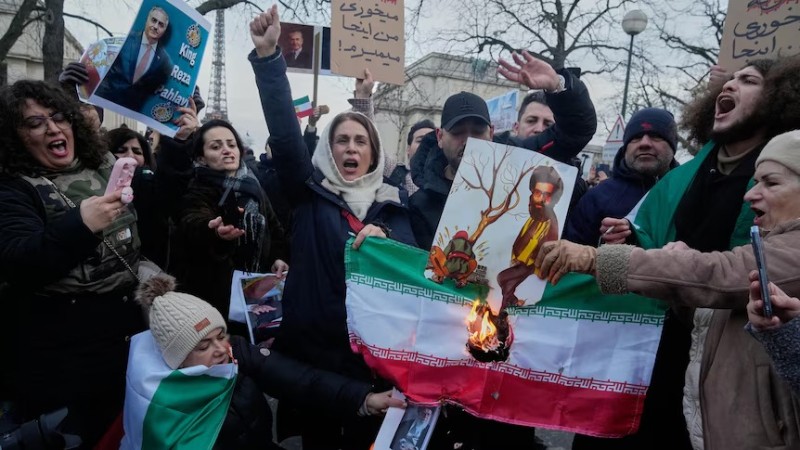 Millions of Iranians want the fall of the Khamenei regime. Photo: X/@@MarioNawfal
In a widely shared Facebook post, commentator Khalid Umar launched a scathing attack on Western protest culture, questioning why campuses and city streets that have echoed with “Free Palestine” slogans for nearly two years have fallen silent as Iran burns.
Umar wrote that while Gaza has become the “latest moral theatre,” there are no mass marches or viral slogans demanding “Free Iran,” even as cities revolt and mass graves reportedly emerge.
“The absence is not accidental. It is revealing,” Umar wrote, accusing liberal activism of being driven not by universal ethics but by ideological alignment. He argued that condemning Tehran would expose uncomfortable truths about political Islam and the global networks that have shielded it for decades.
According to Umar, Iran sits at the strategic core of Islamist militancy, naming Hezbollah, Hamas, Palestinian Islamic Jihad, the Houthis and proxy militias across Iraq and Syria as beneficiaries of Iranian funding, training and ideological backing.
“When students in elite Western universities don green bandanas and chant liberation slogans, they are not opposing power—they are laundering it,” Umar wrote, asserting that Iran’s role as a financier of militant movements makes it untouchable for sections of the Left.
He claimed that condemning Tehran would shatter long-held narratives portraying political Islam as a resistance ideology rather than, in his words, “a governing catastrophe.”
Umar further argued that the current uprising represents something unprecedented in the modern Muslim world: a mass rejection of theocratic rule itself.
He described Iran’s movement not as a reformist struggle but as a “civilisational rupture,” with millions rejecting clerical authority outright.
“They are not reforming Islam. They are rejecting it,” he wrote, calling the uprising a declaration of freedom rather than a protest.
Similar sentiments have been echoed by Luai Ahmed, a Yemeni writer and journalist who has lived under Islamist rule.
In a widely circulated Instagram video, Ahmed praised the bravery of Iranian protesters, comparing their struggle to life under Islamic dictatorships in Yemen, Iran and Saudi Arabia.
He explained how criticism of religious authority in these societies can lead to immediate imprisonment, stressing that religion is routinely used as a tool of oppression.
“The fact that Iranians are going out every single day, risking their lives, is a sign of bravery we should be inspired by,” Ahmed said, urging people in the West to stand in solidarity with protesters who do not enjoy freedom of speech.
He described Iranian demonstrators as “beautiful and brave,” adding that he wished Arab societies showed similar secular resistance to defend minorities and women.
In another post, Ahmed directly attacked those supporting Iran’s clerical establishment, stating: “Anyone who supports the Islamic regime in Iran instead of the Iranian people needs to stay out of Middle Eastern politics for good. I don’t want to hear you say ‘Gaza’ or ‘Palestine’ ever again, you self-righteous hypocrites.”
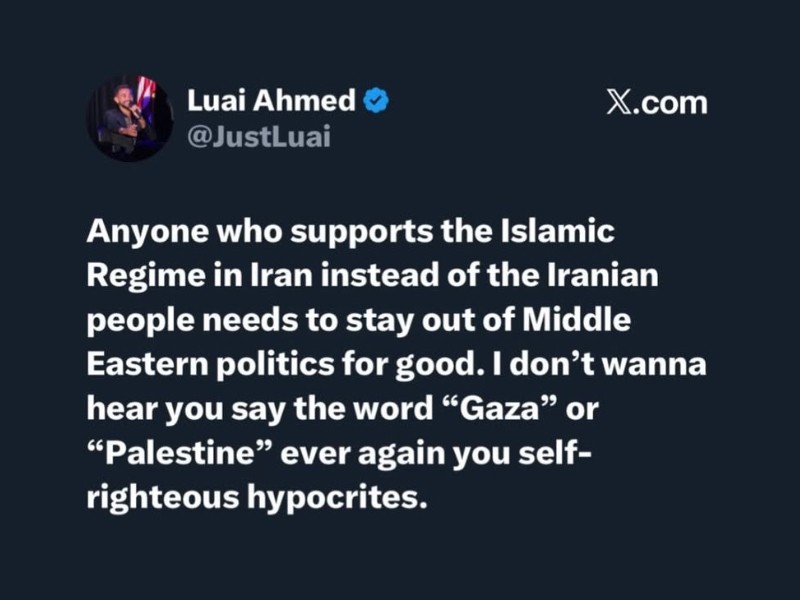
Together, these voices are intensifying scrutiny on what critics describe as the Left’s selective outrage—loud when confronting Western governments, but conspicuously quiet when violence is carried out by Islamist regimes.
Their comments have resonated widely online, adding to the growing backlash against progressive silence as Iran’s streets continue to run red.
Rejection of Islamism and the crux of Iranian protesters’ demands
Central to the protests is the rejection not merely of economic hardship but of theocratic governance itself.
Across Iran, demonstrators are demanding freedom from rigid religious rule that they see as underpinning systemic repression.
Protest chants often call for the downfall of Khamenei’s regime and an end to religious authority in state affairs.
The widespread use of slogans like “Death to Khamenei” underscores this deep rejection of the political role of clerical Islam in Iran.
Internal dissent is not limited to secular economic concerns; it tackles the foundational role of religious authority in policymaking, civil liberties, and everyday life — challenging an 86-year-old Supreme Leader whose regime blends political power with religious legitimacy.
A test for Khamenei: Can the regime withstand this uprising?
The scale and intensity of the protests — spanning dozens of cities, sustained for weeks, and resulting in thousands of deaths and tens of thousands of detentions — mark this as one of the most significant internal challenges to Iran’s theocratic structure since the 1979 Islamic Revolution.
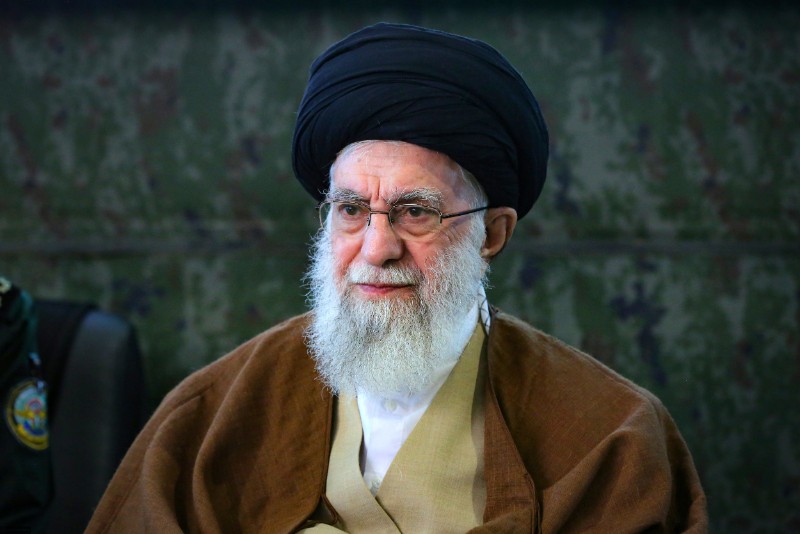 Iran's supreme leader Seyyed Ali Hosseini Khamenei. Photo: Wikimedia Commons/Khamenei.ir
Some analysts view the unrest as a critical stress test for Supreme Leader Khamenei’s hold on power; provincial strikes, bazaar closures, and defiant street actions suggest broad societal discontent beyond isolated protests.
While Iranian state media and officials frame the unrest as foreign-influenced and under control, on-the-ground pressures — from daily life frustrations to broad ideological dissatisfaction — pose enduring risks to the regime’s stability.
Support Our Journalism
We cannot do without you.. your contribution supports unbiased journalism
IBNS is not driven by any ism- not wokeism, not racism, not skewed secularism, not hyper right-wing or left liberal ideals, nor by any hardline religious beliefs or hyper nationalism. We want to serve you good old objective news, as they are. We do not judge or preach. We let people decide for themselves. We only try to present factual and well-sourced news.
Support objective journalism for a small contribution.


