 Online Violence
UN health agency outlines ‘clear direction’ for reducing online violence against children
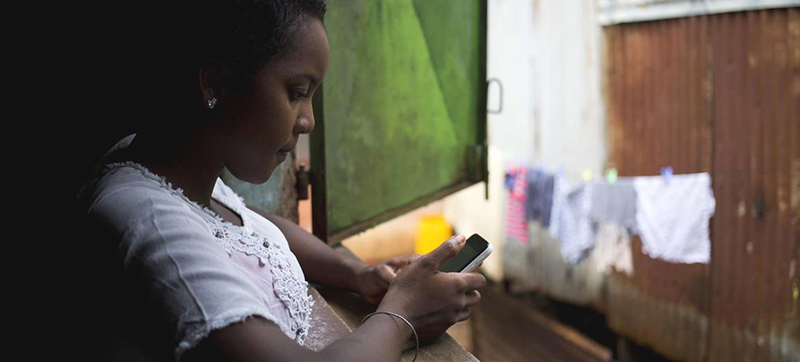
New York: The World Health Organization (WHO) published a report on Friday aimed at helping stakeholders worldwide end the growing scourge of violence online against children.
In its new report, What works to prevent online violence against children, WHO focuses on ways of curbing the grooming of youngsters via the Internet, sexual image abuse - and cyber aggression and harassment in the form of cyberbullying, cyberstalking, hacking and identity theft.
What works also showcases strategies and best practices to better protect children.
“Our children spend more and more time online; as such, it is our duty to make the online environment safe”, noted Etienne Krug, Director of the WHO Department of Social Determinants of Health.
Collective action essential
The report highlights the importance of implementing educational programmes directed at children and parents to prevent online violence.
Studies have shown their effectiveness in reducing levels of victimization, curbing abusers, and associated risk behaviors such as alcohol and drug abuse.
“This new document provides for the first time a clear direction for action by governments, donors and other development partners, showing that we must address online and offline violence together if we are to be effective”, added Mr. Krug.
Wide-ranging strategies
The report recommends implementing school-based educational programmes, promoting interaction among youth, and engaging parents.
It also underscores the importance of training young people in assertiveness, empathy, problem-solving, emotion management and seeking help, among other skills.
WHO pointed out that educational programmes are more successful with multiple and varied delivery formats such as videos, games, posters, infographics and guided discussions.
What works, argues that comprehensive forms of sex education can reduce physical and sexual aggression – particularly in dating online, reducing partner violence, and tackling homophobic bullying.
The effectiveness of sex education has been confirmed in countries across the whole development spectrum.
‘Stranger danger’ overemphasized
Improvements must be made in several areas, according to the report.
Given the overlap of problems and solutions, more violence prevention programmes are needed to address the problem, together with offline violence prevention.
As strangers are not the sole or even the predominant offenders online, less emphasis should be placed on stranger danger.
Instead, more attention should be paid to acquaintances and peers, as they are responsible for a majority of offences.
Given that looking for romance and intimacy online are major sources of vulnerability, the report spotlights the need to emphasize healthy relationship skills.
Harnessing the good
From fostering learning to developing personal and professional skills, and expressing creativity, the internet offers a great deal to children and young people, the report is careful to stress.
However, governments must find the right balance between developing digital opportunities and protecting users from harm.
The UN health agency is committed to contributing to better understanding all forms of violence against children and helping to guide the international response.
As part of its public health approach, WHO currently aids in supporting data collection on violence against children; researching factors that can increase or decrease violence; implementing and evaluating interventions; and scaling up evidence-based interventions, such as those illustrated in INSPIRE: Seven strategies for Ending Violence Against Children.
Support Our Journalism
We cannot do without you.. your contribution supports unbiased journalism
IBNS is not driven by any ism- not wokeism, not racism, not skewed secularism, not hyper right-wing or left liberal ideals, nor by any hardline religious beliefs or hyper nationalism. We want to serve you good old objective news, as they are. We do not judge or preach. We let people decide for themselves. We only try to present factual and well-sourced news.
Support objective journalism for a small contribution.