


Deal blows up: Netanyahu-Vance call triggers US-Iran blame war
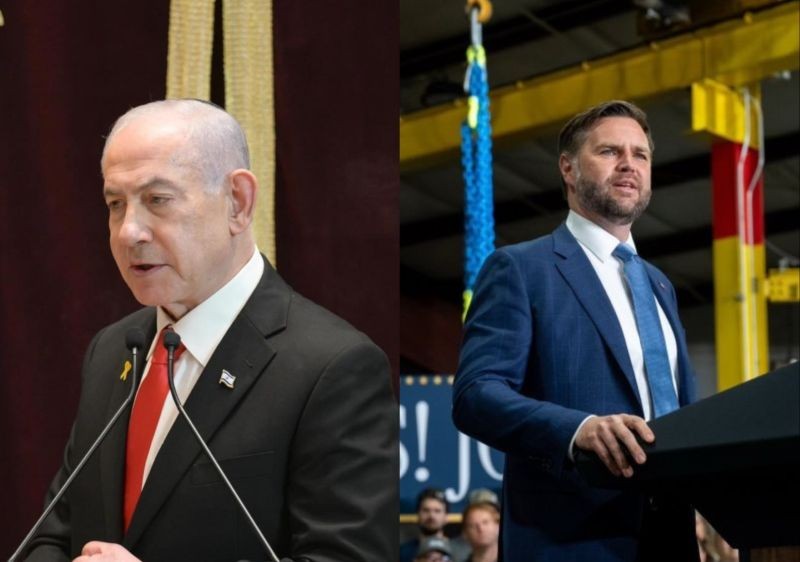
Israeli Prime Minister Benjamin Netanyahu has disclosed details of a crucial phone call with US Vice President JD Vance, made mid-air as he departed Islamabad after marathon peace talks between Washington and Tehran collapsed, media reports said.
Speaking at a cabinet meeting in Jerusalem, Netanyahu said Vance briefed him “in detail” about what he described as an “explosion in the negotiations.”
Why the talks collapsed
According to Netanyahu, the breakdown was triggered by Iran’s failure to meet key preconditions, including an immediate ceasefire and reopening of the Strait of Hormuz.
“The Americans could not tolerate Iran’s blatant violation of the agreement,” he said, placing responsibility squarely on Tehran.
He added that US President Donald Trump remains focused on eliminating Iran’s enriched nuclear material and enforcing a long-term ban on uranium enrichment.
US turns up pressure
Netanyahu indicated that Washington is now preparing tougher measures, including a potential naval blockade on Iran.
He stressed that coordination between the United States and Israel is at an unprecedented level, dismissing any suggestion of a rift.
“This is coordination that never existed before,” he said.
Iran pushes back
Iran, however, has offered a sharply different account. Foreign Minister Seyed Abbas Araghchi claimed Netanyahu’s intervention shifted the course of negotiations.
In a post on X, Araghchi said a call from Netanyahu to Vance during the talks redirected focus from US-Iran issues to Israeli interests.
“The US tried to achieve at the negotiating table what it could not achieve through war,” he wrote, insisting Iran had engaged in good faith.
Netanyahu's criminal trial resumes on Sun. A region-wide ceasefire, incl in Lebanon, would hasten his jailing.
— Seyed Abbas Araghchi (@araghchi) April 9, 2026
If the U S. wishes to crater its economy by letting Netanyahu kill diplomacy, that would ultimately be its choice. We think that would be dumb but are prepared for it.
The starkly conflicting narratives highlight the widening divide between the parties, with the collapse of the Islamabad talks casting fresh uncertainty over any immediate path to de-escalation.
Support Our Journalism
We cannot do without you.. your contribution supports unbiased journalism
IBNS is not driven by any ism- not wokeism, not racism, not skewed secularism, not hyper right-wing or left liberal ideals, nor by any hardline religious beliefs or hyper nationalism. We want to serve you good old objective news, as they are. We do not judge or preach. We let people decide for themselves. We only try to present factual and well-sourced news.
Support objective journalism for a small contribution.


