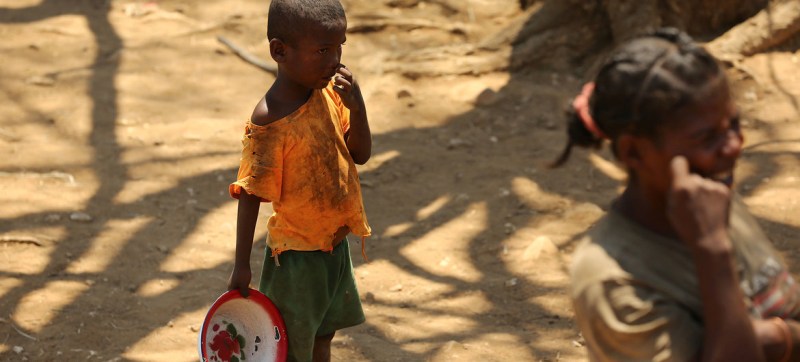
 Madagascar
Rising hunger in drought-stricken southern Madagascar forcing families to eat insects: WFP
New York: Hunger is on the rise in southern Madagascar due to consecutive years of drought, affecting half the region’s population, or 1.5 million people, and forcing most families to eat insects, the World Food Programme (WFP) reported on Friday.
The figure is three times the number projected mid-year, with women and children comprising most of those experiencing “crisis” or “emergency” hunger conditions.
The UN agency pointed out that Madagascar already had the world’s 10th highest rate of stunting, as almost half of all children under the age of five suffer from chronic malnutrition.
Foraging for food
“As hunger numbers rise, so does the proportion of families who are resorting to crisis-coping mechanisms. The majority of them are having to eat bugs. They are selling off lifesaving livelihood assets, farm implements, kitchen utensils,” said Tomson Phiri, a WFP spokesperson in Geneva.
The hunger and malnutrition is the result of three years of ruined harvests, hampering access to food and affecting people across 10 districts.
WFP has described the situation as “extremely worrying”.
Last month, WFP conducted an assessment in Amboasary, the hardest-hit district, which revealed that three-quarters of children were forced to drop out of school so they could help their families forage for food.
“Most of the women that we spoke to said they had nothing to feed their young children except the red cactus pears that grow on the roadside”, said Mr. Phiri.
Hot meals and assistance
As part of its drought response, WFP began life-saving emergency food assistance in September, reaching more than 100,000 people in Amboasary.
This support has included in-kind food distributions but also hot meals for particularly malnourished children and elderly persons.
Some 576,000 people in the nine other districts are also receiving assistance during the lean season, which runs through December.
Mr. Phiri said given the gravity of the situation, the agency plans to continue scaling up operations through next June.
“We additionally seek to help the challenges that are being faced by rural women, who often are prevented from owning land and agricultural assets, as well as face discriminatory customary practices,” he added.
WFP is appealing to the international community for $37.5 million so it can continue response efforts.
Support Our Journalism
We cannot do without you.. your contribution supports unbiased journalism
IBNS is not driven by any ism- not wokeism, not racism, not skewed secularism, not hyper right-wing or left liberal ideals, nor by any hardline religious beliefs or hyper nationalism. We want to serve you good old objective news, as they are. We do not judge or preach. We let people decide for themselves. We only try to present factual and well-sourced news.
Support objective journalism for a small contribution.