Nana Patekar (1951-2026): The Voice That Never Needed a Microphone
There are scenes in Parinda where almost nothing happens and everything does. A man speaks softly, barely moves, and a packed cinema hall forgets to breathe. Nobody in that hall would have called Anna Seth a hero. Nobody could look away from him either.
That was Nana Patekar's trick for four decades. He made menace sound like polite conversation, and polite conversation sound like a threat. On Thursday morning, at 75, that voice fell silent in Goa. He was found unconscious at his Dona Paula home in the early hours and declared dead at Manipal Hospital around 5:20 am after a cardiac arrest.
The Angry Man Who Never Shouted for Effect
Born Vishwanath Patekar, he came to cinema through theatre, and it showed. The stage teaches an actor that a whisper can carry to the last row if it is true. His film debut was Muzaffar Ali's Gaman in 1978, a gentle, art-house portrait of migrant Bombay.
Through the 1980s he worked the parallel-cinema circuit and the angry-young-man films about jobless, restless India, and audiences began to notice a presence that did not seem to be acting at all.
Then came Parinda in 1989, which won him the National Film Award for Best Supporting Actor. Other actors played gangsters as swagger. Nana played Anna as a man for whom violence was just Tuesday. You feared him because he was so calm and chilling.
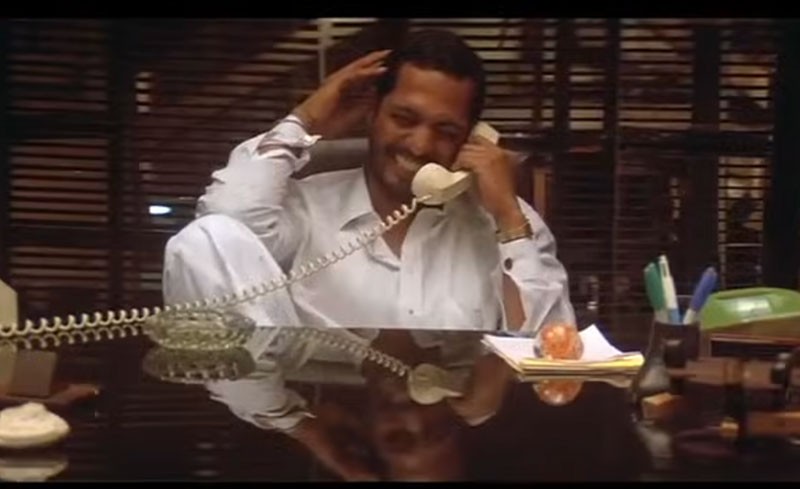 Nana Patekar in Parinda (1989). Photo: YouTube Screenshot
He then stepped behind the camera and directed Prahaar: The Final Attack, a film about discipline and sacrifice that stands apart from his gangster-era image. It was a film about an army major who trains NCC cadets, and what happens when discipline and patriotism collide with violence on the streets. His acting was never about sound. It was a pause before a line, a stare held a beat too long, a sentence delivered as though he were tired of explaining the obvious to the rest of us.
Then there were the dialogues. Krantiveer gave him a National Award for Best Actor and a monologue that people still recite at tea stalls. In Yashwant, the line about what a single mosquito can do to a man became a kind of street proverb. Nobody has to be told which actor delivered it. That is what it means for a performer to become an institution.
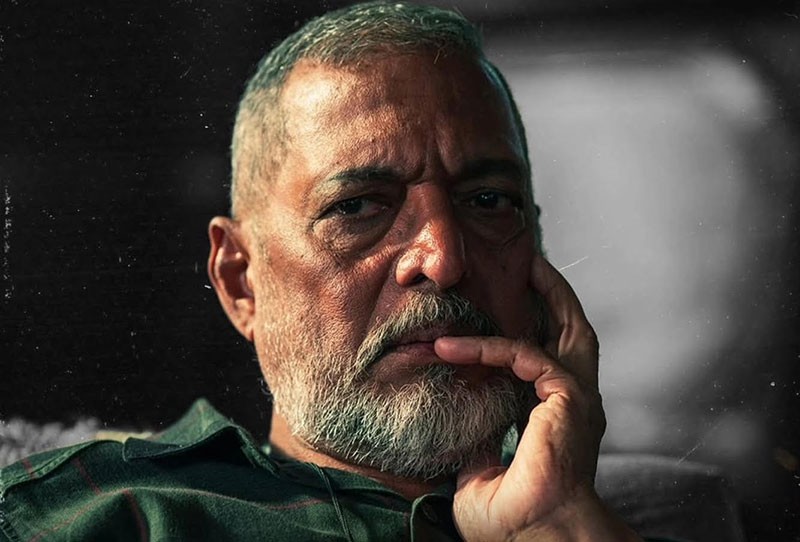
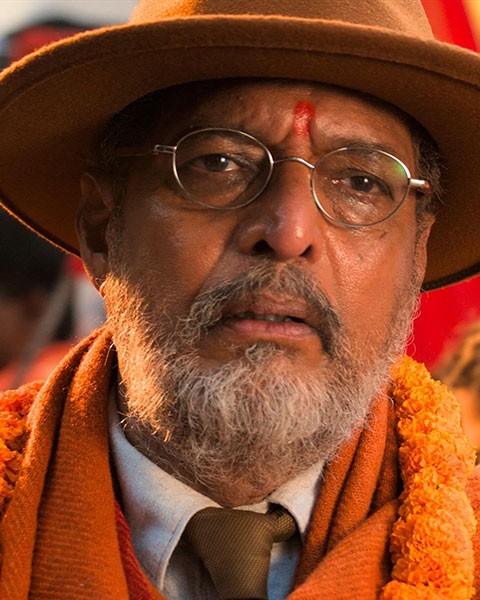 Nana Patekar in his element: intense, unflinching and utterly real. Photo: Nana Patekar/Facebook
Why India Loved Him Back
Here is what made Nana different from other great actors. He was never only the angry man. In Agni Sakshi he won a second National Award, again for supporting work. In Khamoshi: The Musical he played a father with a quiet ache.
In Ab Tak Chhappan he was a weary encounter cop who had seen too much. In Apaharan and Raajneeti he brought gravity to politics and crime.
And then, to everyone's delight, came Welcome, where the same man who once chilled us as Anna turned out to be wickedly funny as Uday Shetty, a don forever undone by his own family's chaos. Akshay Kumar, who shared the screen with him there and later in Housefull 5, remembered how Nana never needed to do too much to make you sit up.
The audience also loved him because he was real. Suniel Shetty called him "unapologetically yourself, fiercely honest." Jr NTR said his performances never felt like acting but like life unfolding on screen.
Anupam Kher, writing hours after the news reached him backstage, said he could almost hear Nana brushing off any tribute: what's the big deal, everyone dies. Those who knew him say that bluntness was no pose. He was the same on set, in his Marathi theatre circle, and in a Dona Paula living room.
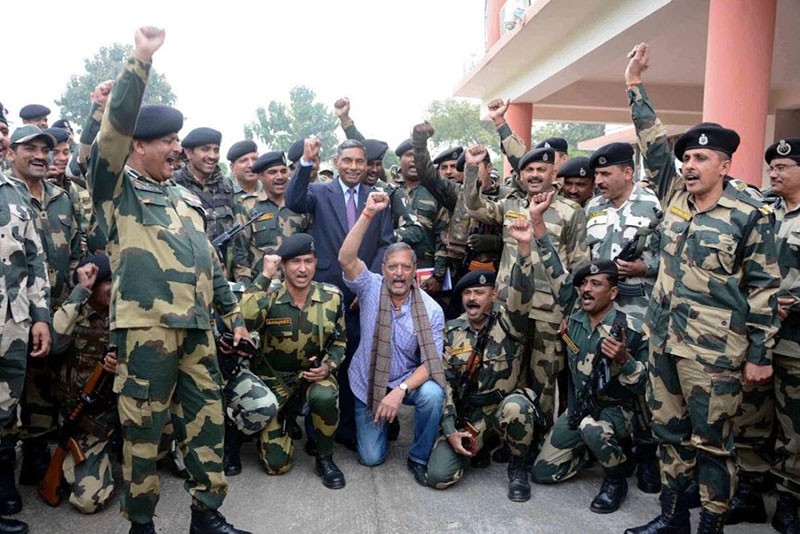 Nana Patekar with men in uniform in 2017. His directorial debut Prahaar (1991) followed an army major training NCC cadets and his encounters with street violence. Photo: Nana Patekar Facebook
His late work carried that honesty into a mellower register. In 2016, Natsamrat gave Marathi cinema one of its great modern performances, a retired stage legend slowly undone by the world he once ruled. The role of an aged king of the stage now reads as an uncanny rehearsal. He was honoured with the Padma Shri, but his real award was the way audiences spoke of him: as "Nana", never "Mr Patekar".
In private life he kept things simple. He lived in Goa with his nephew Prasad Patekar, while his son Malhar was in Pune.
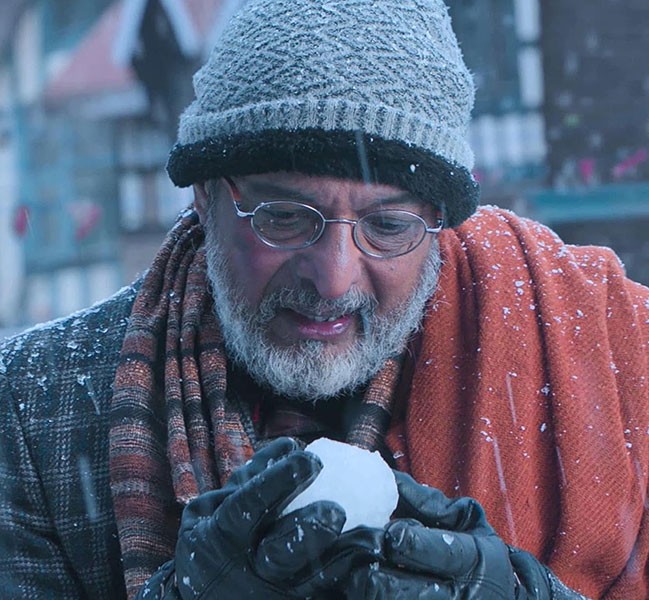 A farewell to "Nana": actor, filmmaker, institution. Photo: Zee Studio/Nana Patekar Facebook
Perhaps the most haunting detail is the speech he gave just four days before he died, at a club event in Dona Paula. "I don't know whether I will be here tomorrow or not," he told the gathering, adding in Marathi that everyone must go someday, but before that, one must ask whether one is doing what one wants to do. It sounded like a line from one of his films. It was just Nana, saying a hard thing plainly.
He did what he wanted to do. For forty-odd years, from small theatre halls to national awards to our living-room television screens, he made India feel, laugh and flinch. The pause, the stare and the gravel voice will still be there on the screen. We will keep replaying them, and he would probably have shrugged and said: arre, what's the big deal?
Support Our Journalism
We cannot do without you.. your contribution supports unbiased journalism
IBNS is not driven by any ism- not wokeism, not racism, not skewed secularism, not hyper right-wing or left liberal ideals, nor by any hardline religious beliefs or hyper nationalism. We want to serve you good old objective news, as they are. We do not judge or preach. We let people decide for themselves. We only try to present factual and well-sourced news.
Support objective journalism for a small contribution.