Youth obesity increases 10-fold in four decades, UN-backed study reveals
“These data highlight, remind and reinforce that overweight and obesity is a global health crisis on Wednesday, and threatens to worsen in coming years unless we start taking drastic action,” Fiona Bull, programme coordinator for surveillance and population-based prevention of noncommunicable diseases (NCDs) at the World Health Organization (WHO), said Wednesday in a news release.
The study led by Imperial College London and WHO was published in The Lancet, ahead of World Obesity Day on Wednesday. It looked at body mass index (BMI) from weight and height measurements of nearly 130 million people, including 31.5 million youth aged five to 19.
Obesity rates in the world's children and adolescents increased from less than 1 per cent – equivalent to five million girls and six million boys – in 1975 to nearly 6 per cent, or 50 million girls, and nearly 8 per cent, or 74 million boys, in 2016.
Combined, the number of obese five to 19 year olds rose more than tenfold globally, from 11 million in 1975 to 124 million in 2016. An additional 213 million were overweight in 2016 but fell below the threshold for obesity.
“These worrying trends reflect the impact of food marketing and policies across the globe, with healthy nutritious foods too expensive for poor families and communities,” said lead author Majid Ezzati, a professor at Imperial's School of Public Health.
He said that the trend predicts a generation of children and adolescents growing up obese and at greater risk of diseases, like diabetes, stressing the need to make healthy, nutritious food more available at home and school, especially in poor families and communities, as well as the need for regulations and taxes to protect children from unhealthy foods.
More youth will be obese than underweight by 2022
The authors say that if post-2000 trends continue, global levels of child and adolescent obesity will surpass those for moderately and severely underweight youth from the same age group by 2022. In 2016, the global number of moderately or severely underweight girls and boys was 75 million and 117 million respectively.
In conjunction with the study, WHO is publishing a summary of the plan that gives countries clear guidance on effective actions to curb childhood and adolescent obesity. WHO has also released guidelines calling on frontline healthcare workers to actively identify and manage children who are overweight or obese.
“Countries should aim particularly to reduce consumption of cheap, ultra-processed, calorie dense, nutrient poor foods. They should also reduce the time children spend on screen-based and sedentary leisure activities by promoting greater participation in physical activity through active recreation and sports,” Bull said.
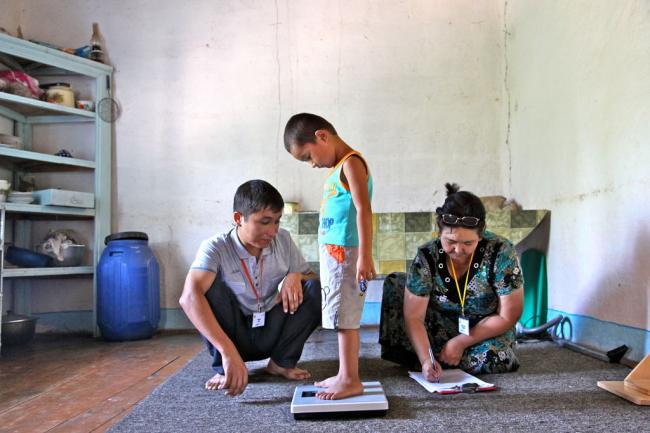
Photo: UNICEF/Giacomo Pirozzi
Source: www.justearthnews.com
Support Our Journalism
We cannot do without you.. your contribution supports unbiased journalism
IBNS is not driven by any ism- not wokeism, not racism, not skewed secularism, not hyper right-wing or left liberal ideals, nor by any hardline religious beliefs or hyper nationalism. We want to serve you good old objective news, as they are. We do not judge or preach. We let people decide for themselves. We only try to present factual and well-sourced news.
Support objective journalism for a small contribution.