With busy bees in the lead, ‘pollinator-friendly’ approach vital for healthy agricultural ecosystems – UN
"A world without pollinators would be a world without food diversity – and in the long run, without food security," José Graziano da Silva, FAO Director-General, said late last week during a visit to Slovenia’s national beekeepers' festival.
FAO, as well as some 53 countries, has supported Slovenia in the promotion of declaring May 20 as the World Bee Day at the last regional Conference of Europe.
The technical committees of FAO and the FAO Conference in 2017 would be one of the first concrete actions in achieving Sustainable Development Goals (SDGs) and the Paris Agreement on climate change, according to Graziano da Silva.
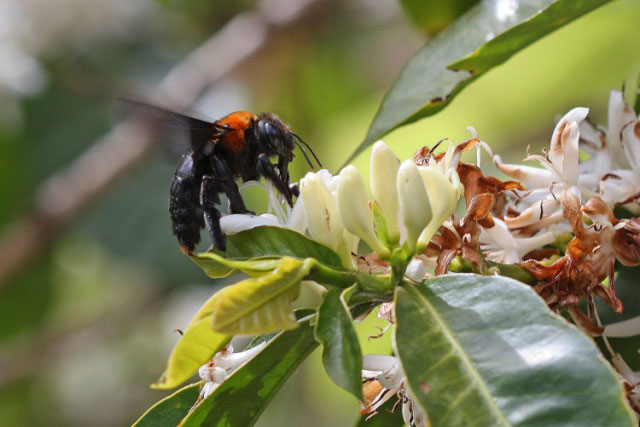
Honeybees, he noted, are the world’s most famous pollinators, a group of species whose members fly, hop and crawl over flowers to allow plants – including those that account for over a third of global food crop production – to reproduce. Their absence, however, would remove a host of nutritious foods from our diets, including potatoes, strawberries, carrots, apples, almonds, tomatoes and cocoa.
Moreover, ecosystem health and biodiversity also depend on more than 20,000 species of wild bees which have links to specific flowering plants and are more vulnerable to climate change.
"Bees are a sign of well-functioning ecosystems," said Graziano da Silva, adding that "to a great extent the decline of pollinators is also a sign of the disruptions that global changes are causing to ecosystems the world over."
Land-use change, pesticide use, monoculture agriculture and climate change are some facts that have threatened bee populations.
Fostering robust pollinator communities ensures a diversity of environmental homes for them and supports traditional agricultural practices that benefit them, he noted.
"Pollination is one of the most visible ecosystem services that make food production even possible," said the FAO Director-General.
Improving pollinator density and diversity have direct and positive impact on crop yields. In this regard, the FAO-backed International Pollinators Initiative – knowledge, guidelines and protocols – has been supporting countries in monitoring pollinators and better understand threats, information needs and data gaps since 2000.
Welcoming Slovenia's leadership in apiculture, Graziano da Silva also urged all countries to take up "pollinator friendly" approaches towards farming and appreciate the important role of bees and other pollinators, and make their pollinator-friendly choices, he added.
"Without bees, it would be impossible to achieve FAO's main goal, a world without hunger," he said.
Photo: FAO/Dino Martins
Source: www.justearthnews.com
Support Our Journalism
We cannot do without you.. your contribution supports unbiased journalism
IBNS is not driven by any ism- not wokeism, not racism, not skewed secularism, not hyper right-wing or left liberal ideals, nor by any hardline religious beliefs or hyper nationalism. We want to serve you good old objective news, as they are. We do not judge or preach. We let people decide for themselves. We only try to present factual and well-sourced news.
Support objective journalism for a small contribution.