


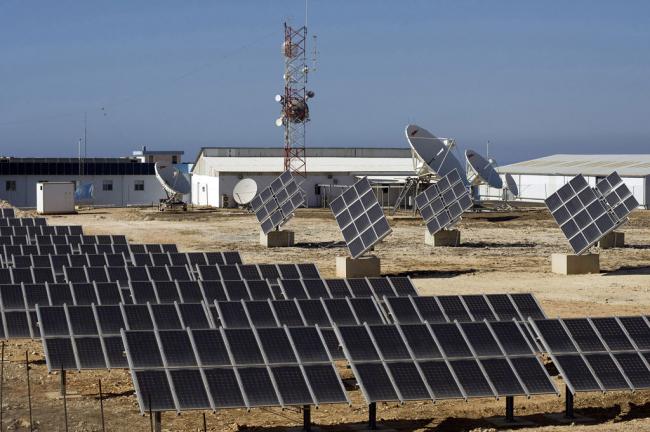
UN launches new strategy to minimize environmental footprint of its peace operation
“Environmental performance is crucial to ensure that we do no harm to the people we are mandated to protect,” said UN Under-Secretary-General and the head of DFS Atul Kahre in New York at the launch of the strategy at Columbia University.
“We need to change our systems and we need to change our mind set,” he added.
DFS is the key service provider to international peacekeeping operations, supporting both UN and non-UN peace missions, with nearly 168,000 authorized personnel, in over 30 countries.
The six-year strategy, which is in line with the UN Sustainable Development Goals (SDGs), identifies challenges and objectives based on five pillars: energy; water and wastewater; solid waste; wider impact; and environmental management syste It also includes key performance indicators for these areas.
In its first phase – through July 2020 – the strategy will focus on improving environmental analytics to effectively monitor progress. The five pillars will then be reviewed and specific targets set for the second phase of strategy implementation to conclude in June 2023.
On one of the areas covered – energy – an indispensable aspect for a mission but one that also has an environmental impact, Khare said the strategy’s objective is to reduce overall demand through increased efficiency, increase the proportion of energy from renewable sources such as solar arrays and reduce the level of pollution.
In another area – water – he highlighted the objective is to conserve water and reduce the level of risk to personnel, local communities and ecosystems from wastewater management practices.
He also emphasized the importance of proper treatment of wastewater, as well as of frequent monitoring of disposal practices.
Noting that the strategy is a “living document,” Khare said that it will continue to be refined and improved in light of new information and achievements.
In his presentation, he also discussed relevant initiatives already under way to decrease peace operations' environmental impact.
Photo: UNIFIL
Source: www.justearthnews.com
Support Our Journalism
We cannot do without you.. your contribution supports unbiased journalism
IBNS is not driven by any ism- not wokeism, not racism, not skewed secularism, not hyper right-wing or left liberal ideals, nor by any hardline religious beliefs or hyper nationalism. We want to serve you good old objective news, as they are. We do not judge or preach. We let people decide for themselves. We only try to present factual and well-sourced news.
Support objective journalism for a small contribution.


