


UN deputy chief calls for greater integration efforts to meet challenges of refugees in urban areas
Speaking at a high-level event on ‘Large Movements of Refugees and Migrants: Critical Challenges for Sustainable Urbanization’ held at UN Headquarters in New York this afternoon, Eliasson said that among the issues that must be addressed include the causes of forced displacement; the safety of migrants and refugees as they cross international borders; and support for host countries to integrate newcomers into their communities.
“There is much for us to do,” the Deputy Secretary-General said. “Every day, millions of refugee children are unable attend school. Every day, the dignity and well-being of millions of people is compromised due to lack of basic services and job opportunities.”
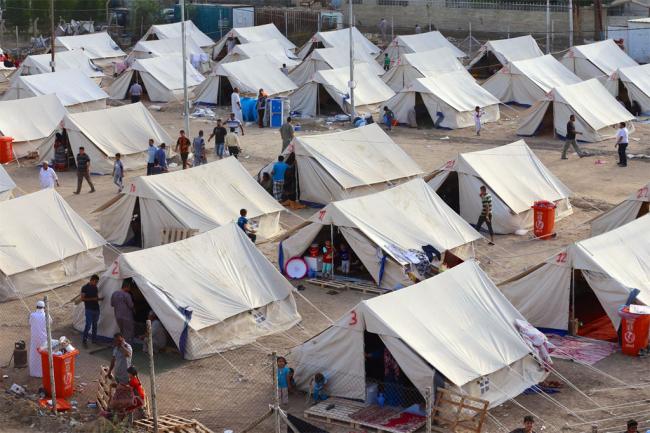
Eliasson noted that while it is true that many refugees, especially in Africa and the Middle East, reside in camps, many more settle and work in host communities. In fact, he said, just one-quarter of all refugees live in camps, according to the UN High Commissioner for Refugees (UNHCR).
“While most of the humanitarian assistance goes to refugees living in camps, the ‘urban refugees’ – if you allow that expression – are largely overlooked,” he said.
“They often end up living in slums or informal settlements on the fringes of the cities, in overcrowded neighbourhoods and in areas prone to flooding, sanitation hazards and disease,” he added.
Eliasson highlighted that in 2009, UNHCR changed its policy and practice towards refugees in cities and towns, and is now working closely with national authorities, municipalities and local communities and authorities to protect urban refugees, respecting their refugee status.
In that vein, he said that the report of Secretary-General Ban Ki-moon, prepared for a summit on refugees and migrants being convened by the General Assembly on 19 September, draws attention to the important role of local authorities, which are at the forefront in providing refugees access to housing, education, health care and employment.
“We should bear in mind that refugees and [internally displaced persons] IDPs often are just a small proportion of those who are swelling the ranks of cities, while the speed of urbanization is getting faster,” the Deputy Secretary-General said.
He noted that it is also important to remember that, even if cities struggle to accommodate large flows of migrants, they also largely benefit from their presence and work, since in many countries in the world, immigrants often take up low-paying jobs and provide services in areas like domestic work, agricultural labour and home care.
“As migrants and refugees continue to arrive – and there are no signs that these flows will diminish any time soon – we must resolve to uphold and implement the principle of every human being’s equal value,” Eliasson stressed. “This is a fundamental human right, never to be compromised.”
The international community, for its part, must be concerned about political rhetoric that stigmatizes refugees and migrants, and do “everything possible to counter this false and negative narrative,” the Deputy Secretary-General said.
“We must dispel the myths about migrants and migration which tend to poison the public discourse,” he added.
“Let us build our policies on the realization of the value that migrants bring to our societies: economic and demographic growth, development, not least through remittances, and I want to add: the beauty of diversity in our nation states,” Eliasson said.
The high-level event was co-organized by the Permanent Mission of Italy, the New York Office of the UN Human Settlements Programme (UN-Habitat) and the Consortium for Sustainable Urbanization, in collaboration with United Cities and Local Governments, the International Organization for Migration, the Office of the UN High Commissioner for Refugees (UNHCR), UN-Women, the International Labour Organization, Network 11 and the New York Chapter of the American Institute of Architects.
Photo: ©UNICEF Iraq/2015/Khuzaie
Source: www.justearthnews.com
Support Our Journalism
We cannot do without you.. your contribution supports unbiased journalism
IBNS is not driven by any ism- not wokeism, not racism, not skewed secularism, not hyper right-wing or left liberal ideals, nor by any hardline religious beliefs or hyper nationalism. We want to serve you good old objective news, as they are. We do not judge or preach. We let people decide for themselves. We only try to present factual and well-sourced news.
Support objective journalism for a small contribution.


