


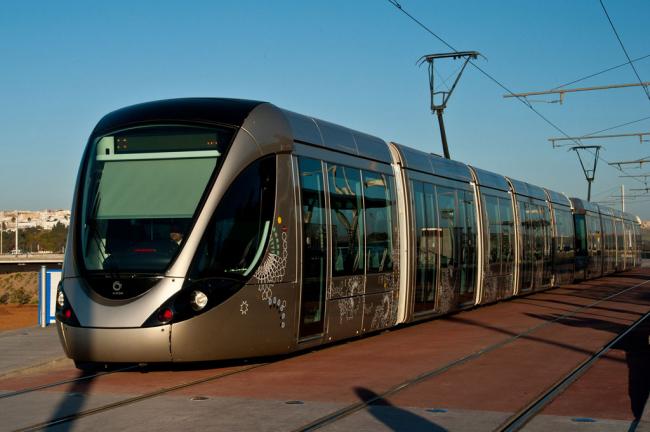
UN conference to address way forward on global sustainable transport challenges
“Without doubt, unsustainable transport brings numerous challenges. For example, the transport sector is responsible for about one quarter of greenhouse gas emissions. Also, more than 1.25 million are killed annually in road traffic accidents – sadly to say that 90 per cent [of these] happen in developing countries,” the UN Under-Secretary-General for Economic and Social Affairs, Wu Hongbo, said on Friday at a press briefing in the Turkmen capital of Ashgabat, ahead of the start of the Global Sustainable Transport Conference there tomorrow.
“Sustainable transport, on the other hand, helps create the infrastructure on which we can build a sustainable future – it provides access to trade, jobs, markets, education, health care and other services that improve people’s lives,” Wu added. “It also empowers women, persons with disabilities, and other vulnerable people. The conference is in Ashgabat is an opportunity for mutual learning and knowledge exchange on implementing sustainable transport.”
According to the UN Department of Economic and Social Affairs (DESA), which Wu heads and is organizing the event, sustainable transport and mobility are crucial for sustainable development, with adequate transport infrastructure and affordable transport services still lacking globally, and with serious negative impacts on public health and well-being, living conditions and climate change.
The furthering of sustainable transport and the establishment of affordable, economically viable, socially acceptable and environmentally sound transport systems is expected to be a key part of discussions at the conference, which will also be attended by UN Secretary-General Ban Ki-moon.
In his remarks to the media on Friday, Wu said the linkage between sustainable transport and implementation of the so-called Sustainable Development Goals (SDGs) – a set of goals to end poverty, protect the planet, and ensure prosperity for all as part of a new sustainable development agenda – will be explored in the discussions.
Each SDG has specific targets to be achieved over the next 15 years, and while sustainable transport is not represented by a standalone SDG, it is essential to achieving most of them and has been mainstreamed across several SDGs and targets, especially those related to food security, health, energy, infrastructure and cities and human settlements, according to DESA.
The Global Sustainable Transport Conference has its foundations in the outcome document of the UN Conference on Sustainable Development (Rio+20), held in the Brazilian city of Rio de Janeiro in 2012. The document – a result of intergovernmental discussions on a range of sustainable development issues – stresses that transportation and mobility are central to sustainable development.
All modes of transport – road, rail, aviation, ferry, and maritime – will be addressed at the Ashgabat gathering, including in both developed and developing countries, as well as in landlocked and transit countries. The concerns of developing countries, including least-developed countries, landlocked developing countries and small island developing states, will receive particular focus.
The issues in focus at the conference were recently highlighted in Quito, Ecuador, during the UN Conference on Housing and Sustainable Urban Development (Habitat III), which culminated in the adoption of a New Urban Agenda, with strong elements of sustainable transport.
While no outcome document is expected at the conclusion of the Ashgabat conference, the Secretary-General has encouraged all UN Member States and other stakeholders to register commitments and partnerships for sustainable transport, through the conference website.
Already, commitments to make transport more sustainable have been registered from governments and private partners from a number of countries, including the United States, India, Pakistan, Bangladesh, Australia, and Asia and Pacific Ocean countries.
Photo: World Bank/Arne Hoel
Source: www.justearthnews.com
Support Our Journalism
We cannot do without you.. your contribution supports unbiased journalism
IBNS is not driven by any ism- not wokeism, not racism, not skewed secularism, not hyper right-wing or left liberal ideals, nor by any hardline religious beliefs or hyper nationalism. We want to serve you good old objective news, as they are. We do not judge or preach. We let people decide for themselves. We only try to present factual and well-sourced news.
Support objective journalism for a small contribution.


