


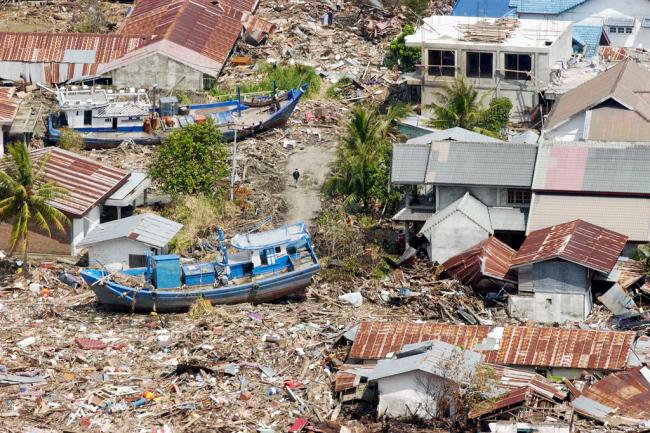
UN-backed plan sets disaster resilience standards for hotels in Asia and Pacific
“The hotel industry in hazard prone areas of the world is very vulnerable to major setbacks from floods, storms and earthquakes. Such events can result in closure of resorts and have a significant impact on tourism and employment," the head of the UN Office for Disaster Risk Reduction (UNISDR), Margareta Wahlström, said.
"The hotel industry has a very important role to play in encouraging disaster risk management at the local level,” she said.
A joint study carried out by UNISDR, the Pacific Asia Travel Association (PATA) and the Global Initiative on Disaster Risk Management (GIDRM) has found significant interest in setting standards among hoteliers, tour operators, tourism bodies, government agencies and insurance companies in the Philippines, Indonesia, Thailand and the Maldives.
The study was carried out for the Hotel Resilient Initiative which aims to develop internationally recognized standards for hotels and resorts that will assist them in reducing business risk and the risk of tourism destinations to natural and technological hazards, while demonstrating the level of preparedness and safety of their premises to potential clients, insurers and financers.
“The report is telling us that there is concern about the lack of universal standards for disaster risk management across the hotel industry,” Wahlström added.
One incentive is that insurance companies could envisage premium reductions for hotels that demonstrate that they are investing in disaster resilience in line with the Sendai Framework for Disaster Risk Reduction which has been adopted with enthusiasm by governments across the region.
The standards will be developed at the end of this year.
Photo: UN Photo/Evan Schneider
Support Our Journalism
We cannot do without you.. your contribution supports unbiased journalism
IBNS is not driven by any ism- not wokeism, not racism, not skewed secularism, not hyper right-wing or left liberal ideals, nor by any hardline religious beliefs or hyper nationalism. We want to serve you good old objective news, as they are. We do not judge or preach. We let people decide for themselves. We only try to present factual and well-sourced news.
Support objective journalism for a small contribution.


