


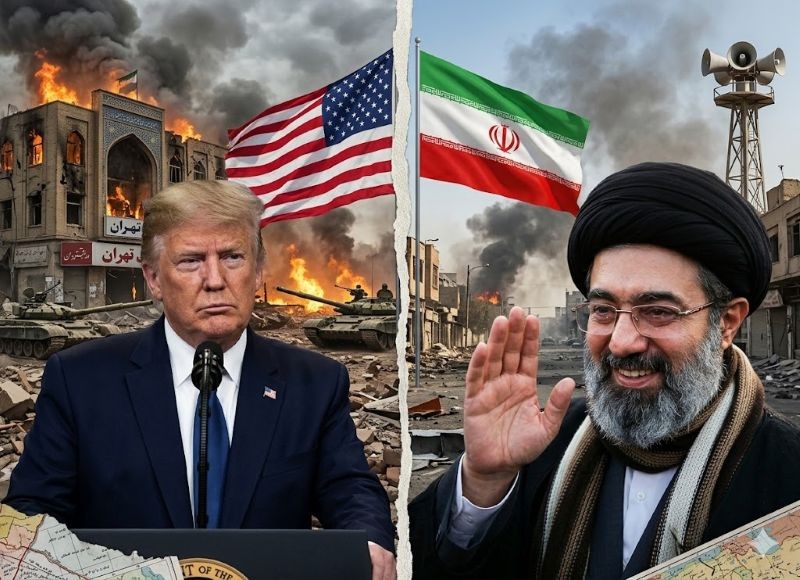
Fragile US–Iran ceasefire holds, but Tehran sets strict conditions
As a fragile truce holds in the Middle East between the United States and Iran, Tehran has made it clear that the agreement comes with significant conditions.
It has also warned that shipping through the Strait of Hormuz will take considerable time to return to pre-war levels.
15 ships a day, IRGC approval mandatory
Under the ceasefire terms, Iran will allow no more than 15 vessels per day to transit the Strait of Hormuz, according to a senior Iranian source cited by TASS ahead of talks in Islamabad. Each vessel must receive prior approval and comply with a strict protocol.
“Fewer than 15 ships per day are permitted under the current ceasefire. Transit is strictly contingent on Iran’s approval and adherence to a specific protocol,” the source said.
This new regulatory framework will operate under the supervision of the Islamic Revolutionary Guard Corps, and regional stakeholders have already been notified.
“There will be no return to the pre-war status quo,” the source added.
Notably, the Strait of Hormuz handles roughly one-fifth of the world’s seaborne crude oil trade, making these restrictions globally significant.
Iran demands release of frozen assets
Tehran has also attached financial conditions to the ceasefire, demanding that its blocked overseas assets be unfrozen within two weeks.
“The unfreezing of Iran’s assets is a critical executive guarantee that must be realised within this timeframe,” the source stated.
In addition, Iran is pushing for the formal end of the war to be recognised through a United Nations Security Council resolution based on its terms.
It has warned of serious consequences if this demand is not met.
No increase in US military presence
Iran has further insisted that Washington refrain from increasing its military presence in the region during the ceasefire period.
On the nuclear front, Tehran reiterated that it remains committed to the agreed terms regarding uranium enrichment.
Just hours before his self-imposed deadline, Donald Trump announced a two-week ceasefire on April 7, describing Iran’s ten-point proposal as a “working basis” for negotiations. He also cited Tehran’s willingness to reopen the Strait of Hormuz.
Formal talks between the two sides are scheduled to take place in Islamabad on April 10.
Lebanon: A major point of tension
The truce is already under strain over Lebanon. Iran insists that any agreement must include Lebanon, while the US and Israel maintain that it is not part of the deal.
Israel has continued its strikes in Lebanon since the ceasefire was announced, raising tensions further.
Tehran has warned that it could close the Strait of Hormuz if Israeli operations in Lebanon continue.
It has also launched missile attacks toward Israel and parts of the Gulf, citing ongoing Israeli actions.
Support Our Journalism
We cannot do without you.. your contribution supports unbiased journalism
IBNS is not driven by any ism- not wokeism, not racism, not skewed secularism, not hyper right-wing or left liberal ideals, nor by any hardline religious beliefs or hyper nationalism. We want to serve you good old objective news, as they are. We do not judge or preach. We let people decide for themselves. We only try to present factual and well-sourced news.
Support objective journalism for a small contribution.


