 Gaming Addiction
Two years, one room, mountains of trash: China’s esports hotel horror sparks gaming addiction debate
Beijing/IBNS: What began as a routine checkout at an esports hotel in northeast China quickly turned into a scene that has unsettled social media and reignited debate over gaming addiction.
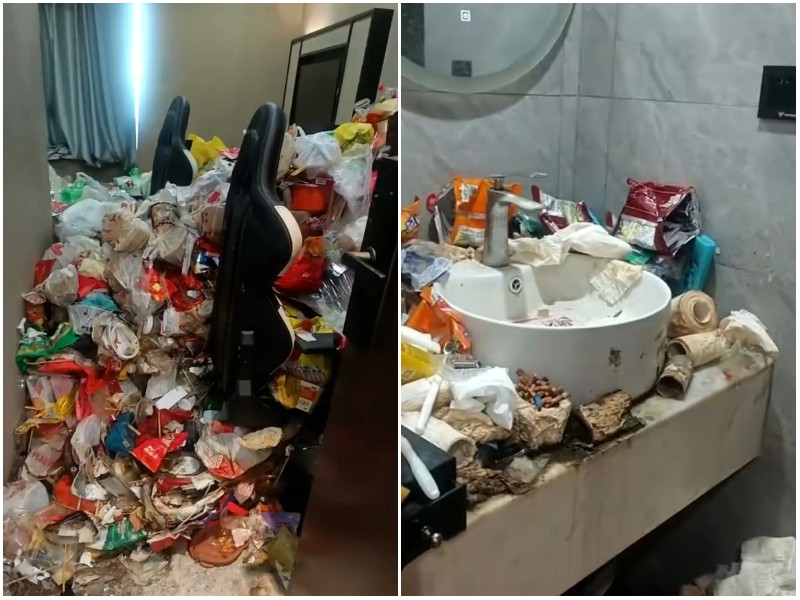
Staff at a gaming-themed hotel in Changchun, the capital of Jilin province, reportedly opened a room vacated by a long-term guest and found it buried under layers of rubbish after nearly two years of uninterrupted stay.
According to local reports, the male guest had occupied the room for close to 24 months without requesting housekeeping even once.
🚨⚡️UNUSUAL
— RussiaNews 🇷🇺 (@mog_russEN) December 19, 2025
A young Chinese man addicted to video games lived in a hotel room for two years and never left it, ordering his food through delivery apps.
After two years, he decided to move to another place, and when cleaning workers entered, they discovered mountains of waste… pic.twitter.com/FtxipRnBZp
Inside, trash was piled up to nearly a metre high in some areas, leaving only narrow paths to walk through.
Takeaway food containers, plastic bottles, food remnants and used packaging covered most surfaces, transforming the room into what staff later described as a serious sanitation hazard.
A ‘do not disturb’ culture gone wrong
Esports hotels have carved out a niche in China’s booming gaming economy by catering specifically to players who value privacy and flexibility.
Equipped with high-end computers, large monitors, gaming chairs and ultra-fast internet, these hotels often allow guests to opt out of daily cleaning.
In the Changchun case, that model appears to have backfired.
The guest reportedly kept the “do not disturb” sign up throughout his stay, effectively cutting off any routine checks.
Over time, what was meant to be convenience and autonomy seems to have enabled extreme neglect.
Short videos filmed by hotel staff after the checkout went viral on Chinese social media platforms.
The footage showed rubbish stacked from floor to waist height, with staff members struggling to move around the room.
The bathroom, in particular, was described as biohazardous and unsafe to enter without protection.
A massive clean-up effort
Faced with the scale of the mess, the hotel sealed off the room and called in professional cleaning crews.
Employees involved in the operation said it took three full days to remove the accumulated waste.
Protective gear was reportedly required throughout the process, and the room suffered damage severe enough to need extensive repairs before it could be used again.
Hotel management later said the guest had always paid on time and caused no disturbances, which is why staff had not intervened earlier.
That explanation, however, has done little to calm public outrage.
Online outrage and concern for well-being
Reaction online was swift and deeply divided.
Many users questioned how hotel management could allow a room to deteriorate to such an extreme degree without stepping in.
Others shifted the focus to the guest himself, viewing the scene as evidence of severe isolation and possible compulsive behaviour.
Commenters pointed out how prolonged gaming sessions, irregular sleep and poor hygiene can reinforce one another when someone lives alone with minimal social contact.
Some described the room as less a scandal and more a warning sign of what can happen when addiction and anonymity intersect.
Gaming addiction under renewed scrutiny
The incident has struck a nerve in China, where concerns about gaming-related harm are already high.
Authorities have imposed strict limits on gaming time for minors, along with real-name verification rules.
While adults are exempt from these restrictions, health experts have repeatedly warned about excessive gaming leading to disrupted sleep, declining self-care and social withdrawal.
Esports hotels, which expanded rapidly after the pandemic, have come under particular scrutiny.
Industry observers say the Changchun case could force operators to reconsider policies around long-term stays, especially where hygiene and safety are concerned.
Privacy versus responsibility
Online discussions have floated ideas such as mandatory periodic inspections, minimum cleaning requirements and clearer clauses in booking agreements that define acceptable living conditions.
At the heart of the debate lies a difficult question: how far should a business go in respecting privacy when neglect turns into a public health risk?
Beyond the shocking images, the episode has come to symbolise a quieter, more unsettling issue.
It shows how easily someone can remain invisible for years, sustained by convenience and anonymity, while slipping into isolation in plain sight.
Support Our Journalism
We cannot do without you.. your contribution supports unbiased journalism
IBNS is not driven by any ism- not wokeism, not racism, not skewed secularism, not hyper right-wing or left liberal ideals, nor by any hardline religious beliefs or hyper nationalism. We want to serve you good old objective news, as they are. We do not judge or preach. We let people decide for themselves. We only try to present factual and well-sourced news.
Support objective journalism for a small contribution.