


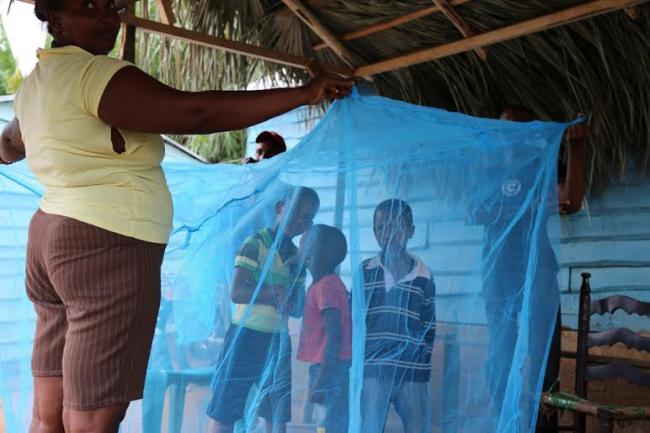
Report by UN and Gates Foundation presents vision for eradicating malaria by 2040
The report – From Aspiration to Action: What Will It Take to End Malaria? – urges major donors and malaria-affected countries to expand their commitment to the fight against the disease, noting that eradication could save 11 million lives and unlock $2 trillion in economic benefits.
“Over the past 15 years, we have seen tremendous progress in reducing the burden of malaria globally – a direct result of our collective action – and we now stand in the unique position of putting an end to this disease forever,” said Ray Chambers, the Secretary-General’s Special Envoy for Financing the Health Millennium Development Goals and for Malaria.
He said, “The next five years are vital for setting in motion an ambitious-yet-achievable plan to eradicate malaria by 2040. We must double down on our commitment and move with deliberate haste to bring in new investments, develop new tools, and implement new regional strategies to see our unified goal of a malaria-free world become a reality.”
According to a news release on the report, global investment in malaria has jumped in recent years by 2,000 per cent annually – from just $130 million in 2000 to $2.7 billion in 2013 – fundamentally transforming the fight against the disease.
Malaria deaths have fallen dramatically – saving an estimated 6.2 million lives and averting 663 million cases of the disease since 2000 – and more than half of the world’s nations are now malaria free.
These gains have accounted for 20 per cent of the total progress that the world has made in reducing maternal and child mortality under the Millennium Development Goals, and they have helped convince Asian and African leaders to commit to malaria elimination by 2040.
The challenge, according to Chambers and Bill Gates, is that one billion people remain infected with the malaria parasite, and half of the world’s children remain vulnerable to death and disability caused by the disease. Malaria still kills about one child every minute.
They argue that eradication is ultimately the only feasible solution to this challenge, and assert that the alternative to eradication – controlling the disease forever without eliminating it – is biologically and politically untenable.
The report envisions a new approach to eradication that will draw important lessons from past eradication efforts and apply innovative strategies, tools and financing.
“Eradication is the only sustainable solution to malaria,” said Mr. Gates. “The alternative would be endless investment in the development of new drugs and insecticides just to stay one step ahead of resistance. The world can’t afford that approach.”
Photo: WHO/PAHO
Support Our Journalism
We cannot do without you.. your contribution supports unbiased journalism
IBNS is not driven by any ism- not wokeism, not racism, not skewed secularism, not hyper right-wing or left liberal ideals, nor by any hardline religious beliefs or hyper nationalism. We want to serve you good old objective news, as they are. We do not judge or preach. We let people decide for themselves. We only try to present factual and well-sourced news.
Support objective journalism for a small contribution.


