New UN manual aims to address management of violent extremists in prison settings
The Handbook on the Management of Violent Extremist Prisoners and the Prevention of Radicalization to Violence in Prisons, launched on Monday by the UN Office on Drugs and Crime (UNODC) aims to strengthen key components of prison management, including training of prison staff, risk management and rehabilitation efforts.
“It also cautions against generalized assumptions regarding a very complex topic, as well as against 'quick fix solutions' when it comes to the management of violent extremist prisoners,” said UNODC in a news release announcing the manual.
In addition to loss of life and economic damage, violent extremism – a challenge confronting many countries around the world – can divide communities and give rise to increasingly reactionary and extremist views. On top of these challenges, management of such violent elements who end up in custody of the State is equally important and urgent.
Speaking at the launch, the Deputy Executive Director of UNODC, Aldo Lale-Demoz, drew attention to the need to integrate interventions for violent extremist prisoners in broader prison reform efforts.
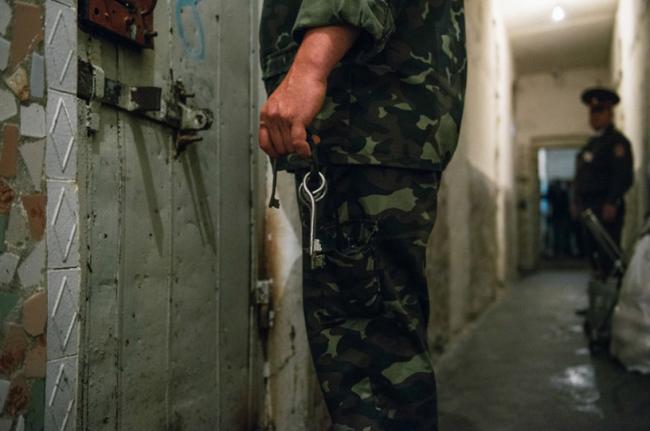
“Overcrowding, poor prison conditions and infrastructure, insufficient prison management capacity as well as corruption, for example, are all factors which will poison attempts to effectively prevent and counter violent extremism in prisons,” he said.
Also at the launch event, held in the Austrian capital, Vienna, participants underscored the importance of the UN Standard Minimum Rules for the Treatment of Prisoners – informally dubbed the Nelson Mandela Rules – for prison management.
They added that the overarching framework equally applied to violent extremist prisoners.
The Standard Minimum Rules constitute the universally acknowledged minimum standards for the management of prison facilities and the treatment of prisoners. Originally adopted by the UN Congress on the Prevention of Crime and the Treatment of Offenders in 1955, the revised Rules were launched in October 2015.
Photo: UNAIDS/D. Gutu
Source: www.justearthnews.com
Support Our Journalism
We cannot do without you.. your contribution supports unbiased journalism
IBNS is not driven by any ism- not wokeism, not racism, not skewed secularism, not hyper right-wing or left liberal ideals, nor by any hardline religious beliefs or hyper nationalism. We want to serve you good old objective news, as they are. We do not judge or preach. We let people decide for themselves. We only try to present factual and well-sourced news.
Support objective journalism for a small contribution.