New UN-backed report cites climate change among factors fuelling internal displacement
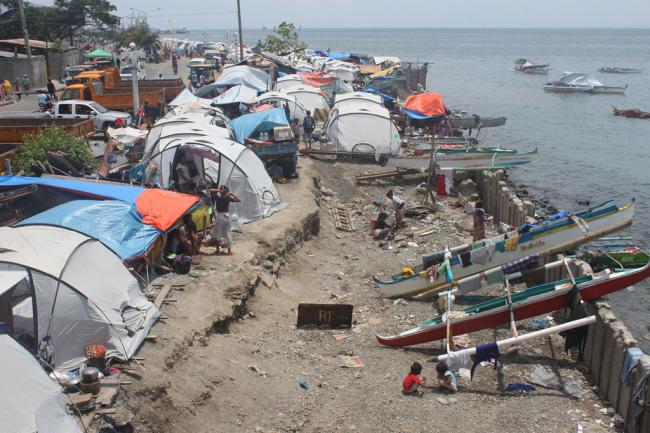
“Internal displacement is a reliable barometer of the scale of humanitarian needs around the globe and last year there were 27.8 million displacements associated with conflict, violence and disasters in 127 countries including 19.2 million forced by natural hazards,” said the head of the UN Office for Disaster Risk Reduction, Robert Glasser, on Thursday citing new figures in the Global Report on Internal Displacement.
Glasser said underscored that the figure goes to the heart of the humanitarian crisis now facing the world and which will be discussed at the World Humanitarian Summit, to be convened by UN Secretary-General Ban Ki-moon 10 days from now.
“The majority of displacement caused by natural hazards was caused by extreme weather events during a year which saw a record number of droughts, widespread flooding and 90 major tropical storms,” he continued, noting that much of this was fuelled by a very strong El Niño occurring in the context of increasing climate change.
Weather-related hazards resulted in 14.7 million displacements, Glasser added, saying that the Internal Displacement Monitoring Centre is to be congratulated for attempting to capture this important data.
“Our concern must be to develop better capacity to manage disaster risk at local level to avoid displacement on this scale and that means improving early warnings, providing low cost housing in safe locations and doing all we can to reduce the numbers of people affected by disasters as agreed by UN Member States when they adopted the Sendai Framework for Disaster Risk Reduction last year,” he underscored.
The Sendai Framework for Disaster Risk Reduction is the global plan for reducing disaster risk and disaster losses adopted by UN Member States at a World Conference in Sendai, Japan, last year. It sets targets for reducing disaster related mortality, numbers of people affected, damage to critical infrastructure and economic losses.
The Global Report on Internal Displacement was produced by the Norwegian Refugee Council.
Photo: OCHA
Support Our Journalism
We cannot do without you.. your contribution supports unbiased journalism
IBNS is not driven by any ism- not wokeism, not racism, not skewed secularism, not hyper right-wing or left liberal ideals, nor by any hardline religious beliefs or hyper nationalism. We want to serve you good old objective news, as they are. We do not judge or preach. We let people decide for themselves. We only try to present factual and well-sourced news.
Support objective journalism for a small contribution.