


Modernizing sub-Saharan Africa’s farming systems can boost livelihoods, help feed the world – UN
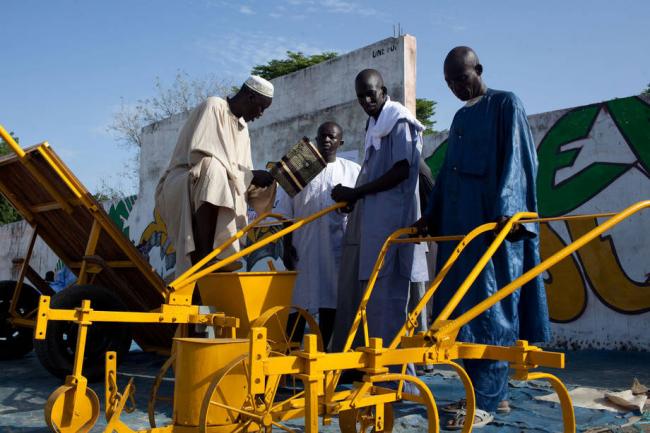
A new FAO report launched on Thursday reveals for example, that farm mechanization can facilitate increased output of higher value products while eliminating the drudgery associated with human muscle-powered agricultural production. Improved livelihoods for small farmers means increased access to input supply chains and integration in modern food systems, resulting in improved incomes, numerous and renewed business opportunities, among other gains.
“Moreover, agricultural mechanization in its broadest sense can contribute significantly to the sustainable development of food systems globally, as it has the potential to render post-harvest, processing and marketing activities and functions more efficient, effective and environmentally friendly,” said FAO Assistant Director-General Ren Wang, head of the Agriculture and Consumer Protection Department in a news release on the report.
The agency’s Agricultural mechanization: A key input for sub-Saharan African Smallholders report underlines that agricultural mechanization in the twenty-first century should be environmentally compatible, economically viable, affordable, adapted to local conditions and, in view of current developments in weather patterns, climate-smart.
Mechanization covers all levels of farming and processing technologies, from simple and basic hand tools to more sophisticated and motorized equipment, it goes on to explain, adding that it extends far beyond ploughing and can contribute to productivity gains and new jobs in the post-harvest, processing and marketing stages of local and global food syste
As things stand, two-thirds of the power used to prepare sub-Saharan African land for farming is provided by human muscle. Comparable rates are 30 percent for South Asia and even lower for Latin America.
“There is no doubt that the application of ‘farm power’ to appropriate tools, implements and machines is an essential agricultural input in sub-Saharan Africa with the potential to transform the lives and economies of millions of rural families,” said Wang.
Overall, FAO stresses that the opportunity provided by mechanization must be guided in a way that meets small farmers’ needs and that does not require a ‘Green-Revolution’ type of approach with high levels of agrochemical inputs and destructive ploughing operations that threaten soil health and fertility.
According to FAO expert and key author of the report Josef Kienzle, mechanization allows smallholders both to intensify and expand agricultural production as well as enabling some family members to seek off-farm jobs and incomes.
As rural African youths increasingly migrate to urban centres, the region may face labour shortages along with increasing demand for food to be sent to the cities. Mechanization can help the often elderly or female farmers who remain in rural areas to keep up with higher output needs, thus contributing to increased food security and climate change mitigation.
It can be achieved when well-managed private sector mechanization service centres are installed and services are within reach. Interventions from the public sector to help this process include providing specific incentives depending on the mechanization power source and user type, said the FAO expert.
Photo: FAO/Swiatoslaw Wojtkowiak
Source: www.justearthnews.com
Support Our Journalism
We cannot do without you.. your contribution supports unbiased journalism
IBNS is not driven by any ism- not wokeism, not racism, not skewed secularism, not hyper right-wing or left liberal ideals, nor by any hardline religious beliefs or hyper nationalism. We want to serve you good old objective news, as they are. We do not judge or preach. We let people decide for themselves. We only try to present factual and well-sourced news.
Support objective journalism for a small contribution.


