


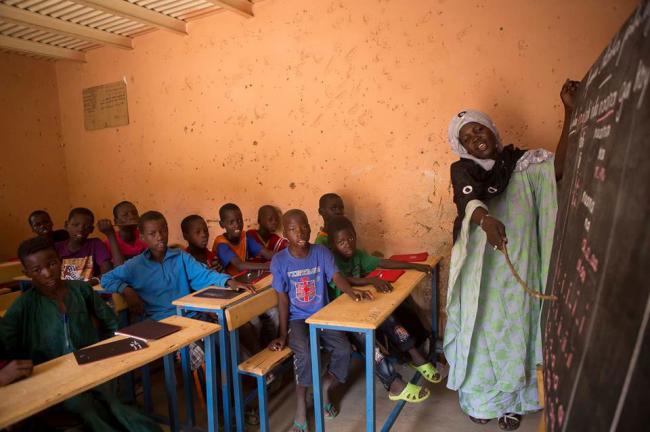
Mali: UNICEF condemns withdrawal of children from schools in Kidal
According to sources verified by UNICEF, many children were removed from classrooms during the school day to participate in rallies.
“UNICEF condemns any action or helping to prevent the normal development of the education of children and reminds all parties that the place of the child is in school, because education is the best way to ensure a prosperous future for children and the nation,” the agency said in a press statement.
"Access to education has been made impossible for many children in Kidal. Efforts to bring thousands of children to school in northern Mali are likely to be lost if children [whose situation is already fragile], are removed from the classroom," said Fran Equiza, UNICEF Representative in Mali.
According to the agency, when children are not in school, they are more vulnerable to abuse, exploitation or recruitment by armed groups. As such, UNICEF called for them to be kept in school so they can continue their education. In addition, just two months away from end-of-year exams, an interruption may cost them an entire year of education.
For the school year 2015-2016, considerable efforts made by education partners in Mali, including UNICEF, to help increase access to formal education for some 344,115 children in the regions of Gao, Timbuktu, Kidal, Mopti and Segou, affected by the security crisis. Since October 2015, through the campaign 'Every Child Matters,' UNICEF was able to facilitate the return and remain in school for 29,592 children in areas affected by the crisis, including 4,934 in Kidal.
Photo: UNICEF/Harandane Dicko
Support Our Journalism
We cannot do without you.. your contribution supports unbiased journalism
IBNS is not driven by any ism- not wokeism, not racism, not skewed secularism, not hyper right-wing or left liberal ideals, nor by any hardline religious beliefs or hyper nationalism. We want to serve you good old objective news, as they are. We do not judge or preach. We let people decide for themselves. We only try to present factual and well-sourced news.
Support objective journalism for a small contribution.


