


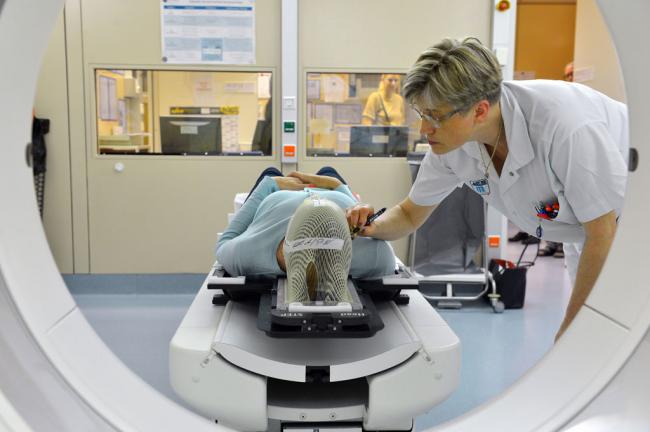
Improved UN database spotlights huge global disparities in access to cancer care
“Data shows that, despite efforts to improve the situation in recent decades, a lot is still needed to provide adequate access to cancer care,” Joanna Izewska, head of the International Atomic Energy Agency’s (IAEA) Dosimetry Laboratory, in charge of the database, said in a news release on Wednesday.
Conclusions inferred from the Directory of Radiotherapy Centres (DIRAC) show that most radiotherapy facilities are located in high-income countries and at least 36 countries do not have such radiotherapy facilities. The Directory draws data from 141 countries, including on radiotherapy machines, radiation sources, staff in radiotherapy centres as well as on the type and age of equipment.
According to the IAEA, The system has been redesigned to make it more user-friendly and to provide an integrated picture with better comparisons between countries and regions.
“Professionals worldwide rely on DIRAC and request information every day. It is a powerful tool for planning radiotherapy services and for advocating better access to cancer treatment in developing countries,” noted Izewska in the news release.
The IAEA further noted that the Directory has shown that thousands of additional radiotherapy machines and substantial staff training are required to cover the current gap in access to treatment in low- and middle- income countries. It added that according to estimates from a 2015 Lancet Oncology Report, some 50 per cent to 60 per cent of all cancer patients will need radiotherapy at some point during their treatment.
In addition, more than 300 radiotherapy machines registered in the database are older than 30 years and will need to be replaced.
The IAEA has been collecting data on radiotherapy centres since 1959 and the data in DIRAC has been derived from the UN agency’s dosimetry audit services operated with the World Health Organization (WHO) and other audit networks, collected from radiotherapy centres, national databases and manufacturers.
The revamped portal was launched on Wednesday on the margins of the IAEA General Conference, being held in Vienna, Austria from 26 to 30 September.
Photo: IAEA
Source: www.justearthnews.com
Support Our Journalism
We cannot do without you.. your contribution supports unbiased journalism
IBNS is not driven by any ism- not wokeism, not racism, not skewed secularism, not hyper right-wing or left liberal ideals, nor by any hardline religious beliefs or hyper nationalism. We want to serve you good old objective news, as they are. We do not judge or preach. We let people decide for themselves. We only try to present factual and well-sourced news.
Support objective journalism for a small contribution.


