End child labour in supply chains: It’s everyone’s business, says ILO
"It is unacceptable that there are still 168 million children in child labour, 85 million of whom are in hazardous work. Child labour is found in agriculture – 99 million – to mining, from manufacturing to tourism, producing goods and services consumed by millions every day," read the ILO website
Child labour occurs predominantly in the rural and informal economies, beyond the reach of labour inspection, the protection of workers’ organizations or the governance benefits of employers’ and producers’ organizations.
It’s not just the lack of institutional protection in the rural and informal economies that increases the risk of child labour in supply chains; in household production and on family farms, children are often highly vulnerable because parents’ incomes are insufficient or because small family enterprises and farms cannot afford to replace child labour by hiring adults and youth. Piece rate production increases the risk with child labour helping parents to make up quotas and to assure family survival when parents are not earning a living wage.
Global supply chains can offer opportunities for inclusive development for supplier firms, workers and host countries, but targeted action is needed to assure just outcomes.
Beyond child labour in high profile, global supply chains, many child labourers are also found in supply chains producing for local and national consumption and they must not be ignored.
There are encouraging signs of a will to act and to prevent child labour, to achieve greater transparency and visibility along supply chains as well as more effective enforcement of relevant laws.
The ILO’s Minimum Age Convention, 1973 (No. 138) has been ratified by 168 member States and the Worst Forms of Child Labour Convention, 1999 (No. 182) by 180 – near universal ratification.
Governments are recognizing that the fight against child labour requires coherent policy packages to back child labour legislation: quality education, social protection and decent jobs for parents.
Companies are increasingly exploring how they might contribute to eliminating child labour by strengthening the capacity of enterprises throughout their supply chains – a complex task requiring partnerships involving governments, industry peers and employers’ and workers’ organizations. Forums such as the ILO’s Child Labour Platform allow enterprises to share good practices and develop new models for collaboration.
Global Framework Agreements between global trade union federations and multinational companies are one expression of global cooperation through social dialogue. At the grassroots of value chains too, rural workers’ and informal workers’ organizations are expanding innovative approaches to strengthen collective representation.
The ILO’s Tripartite Declaration of Principles concerning Multinational Enterprises and Social Policy of 1977 recognizes the role of enterprises in the elimination of child labour. With its focus on development and strengthening of enterprise capacity and social dialogue, this Declaration holds great potential to guide action against child labour.
The 2030 Sustainable Development Agenda reaffirms the goal of ending child labour. Acting together, it is within our means to make the future of work a future without child labour.
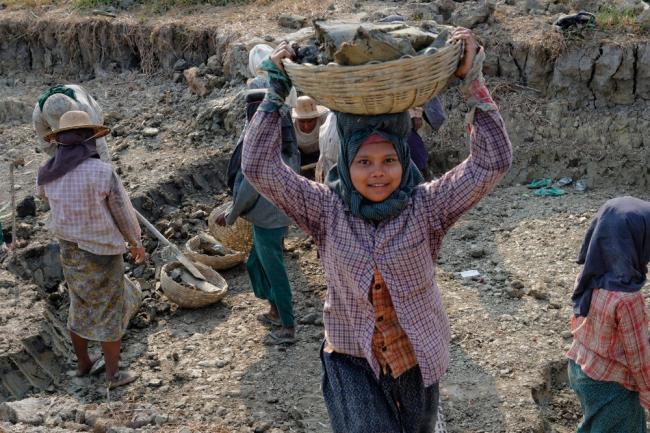
(Photo: ILO/Marcel Crozet)
Source: www.justearthnews.com
Support Our Journalism
We cannot do without you.. your contribution supports unbiased journalism
IBNS is not driven by any ism- not wokeism, not racism, not skewed secularism, not hyper right-wing or left liberal ideals, nor by any hardline religious beliefs or hyper nationalism. We want to serve you good old objective news, as they are. We do not judge or preach. We let people decide for themselves. We only try to present factual and well-sourced news.
Support objective journalism for a small contribution.