


Ease sanctions against countries fighting COVID-19: UN human rights chief
New York/IBNS: As the COVID-19 pandemic progresses, the UN High Commissioner for Human Rights on Tuesday called for an easing of sanctions against countries such as Iran to allow their medical systems to fight the disease and limit its global spread.
Michelle Bachelet said humanitarian exemptions to sanctions measures should be authorized for essential medical equipment and supplies to avoid the collapse of any national healthcare system.
COVID-19 has affected nearly 190 countries, with more than 330,000 cases reported globally as of Monday, according to data from the World Health Organization (WHO). “At this crucial time, both for global public health reasons, and to support the rights and lives of millions of people in these countries, sectoral sanctions should be eased or suspended. In a context of global pandemic, impeding medical efforts in one country heightens the risk for all of us”, she stated.
At least 1,800 people in Iran have died from the disease, including 50 doctors. Human rights reports on the country have repeatedly highlighted the impact of sanctions on access to essential medicines and equipment, such as respirators and protective equipment for healthcare workers.
Bachelet feared sanctions could also impact medical efforts in Cuba, the Democratic People’s Republic of Korea (DPRK), Venezuela and Zimbabwe.
“The majority of these states have frail or weak health systems. Progress in upholding human rights is essential to improve those systems – but obstacles to the import of vital medical supplies, including over-compliance with sanctions by banks, will create long-lasting harm to vulnerable communities”, she said.
“The populations in these countries are in no way responsible for the policies being targeted by sanctions, and to varying degrees have already been living in a precarious situation for prolonged periods”.
The UN rights chief underscored the need to protect health workers in these countries, who are on the frontlines of the COVID-19 crisis, while authorities should not punish professionals who point out any deficiencies in response.
Bachelet urged world leaders to come together at this time as no country can combat the pandemic alone.
Photo caption and credit:
UNICEF/Velasquez
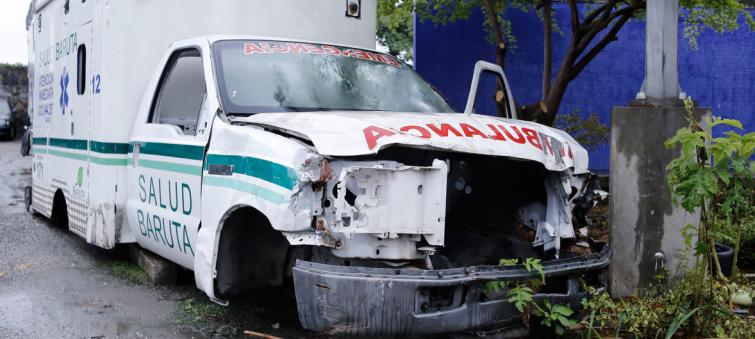
At a health center health center on the outskirts of Caracas, Venezuela, a lack of spare parts has rendered mobile health units and ambulances unusable. (5 June 2019)
Support Our Journalism
We cannot do without you.. your contribution supports unbiased journalism
IBNS is not driven by any ism- not wokeism, not racism, not skewed secularism, not hyper right-wing or left liberal ideals, nor by any hardline religious beliefs or hyper nationalism. We want to serve you good old objective news, as they are. We do not judge or preach. We let people decide for themselves. We only try to present factual and well-sourced news.
Support objective journalism for a small contribution.


