Decent jobs deficit, economic woes threaten to undo poverty reduction gains – UN report
Along with these challenges, the ILO’s World Employment and Social Outlook 2016: Transforming jobs to end poverty notes that relative poverty in developing countries is on the rise. Indeed, it finds that more than 36 per cent of the emerging and developing world lives in poverty – on a daily income of less than $3.10 purchasing power parity (PPP).
Noting that some $600 billion a year – or nearly $10 trillion in total over 15 years – is needed to eradicate extreme – and moderate – poverty globally by 2030, the report concludes that the problem of persistent poverty cannot be solved by income transfers alone; more and better jobs are crucial to achieving this goal.
“If we are serious about the 2030 Agenda then we must focus on the quality of jobs in all nations," said Guy Ryder, ILO Director-General in a press release on the report, which estimates that while almost a third of the extremely or moderately poor in developing economies have jobs, their employment is vulnerable in nature: they are sometimes unpaid, concentrated in low-skilled occupations and, in the absence of social protection, rely almost exclusively on labour income.
Moreover, among developed countries, more workers have wage and salaried employment, but that does not stop them from falling into poverty. To that end, the report finds that the incidence of relative poverty has increased by one percentage point in the European Union, since the start of the global economic and financial crisis.
Further, recent deterioration of economic prospects in Asia, Latin America and the Arab region and natural resource rich countries has begun to expose the fragility of employment and social progress. In some of these countries income inequality has begun to rise after decades of declines, raising the possibility that progress on poverty might be at risk.
“Clearly, the Sustainable Development Goal of ending poverty in all its forms everywhere by 2030 is at risk,” Ryder continued.
“Right now, while 30 per cent of the world is poor, they only hold 2 per cent of the world’s income,” said Raymond Torres, ILO Special Advisor on Social and Economic Issues. “Only through deliberately improving the quality of employment for those who have jobs and creating new decent work will we provide a durable exit from precarious living conditions and improve livelihoods for the working poor and their families.”
The study also finds that high levels of income inequality reduce the impact of economic growth on poverty reduction. “This finding tells us that it is past time to reflect on the responsibility of rich nations and individuals in the perpetuation of poverty. Accepting the status quo is not an option,” adds Mr Torres.
The report concludes with a number of recommendations to address the structural challenges to providing quality jobs and a concomitant reduction in poverty. They include, among others: tackle low-productivity traps, which lie at the heart of poverty; strengthen rights at work and enable employer and worker organizations to reach the poor; reinforce governments’ capacity to implement poverty-reducing policies and standards; and boosting resources and making the rich aware of their responsibility.
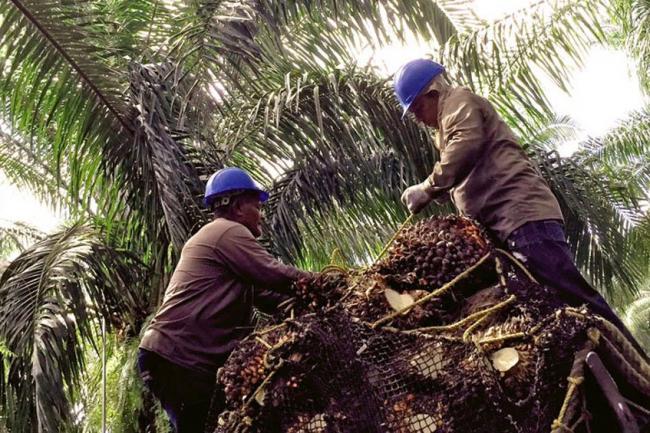
Photo: ILO
Source: www.justearthnews.com
Support Our Journalism
We cannot do without you.. your contribution supports unbiased journalism
IBNS is not driven by any ism- not wokeism, not racism, not skewed secularism, not hyper right-wing or left liberal ideals, nor by any hardline religious beliefs or hyper nationalism. We want to serve you good old objective news, as they are. We do not judge or preach. We let people decide for themselves. We only try to present factual and well-sourced news.
Support objective journalism for a small contribution.