


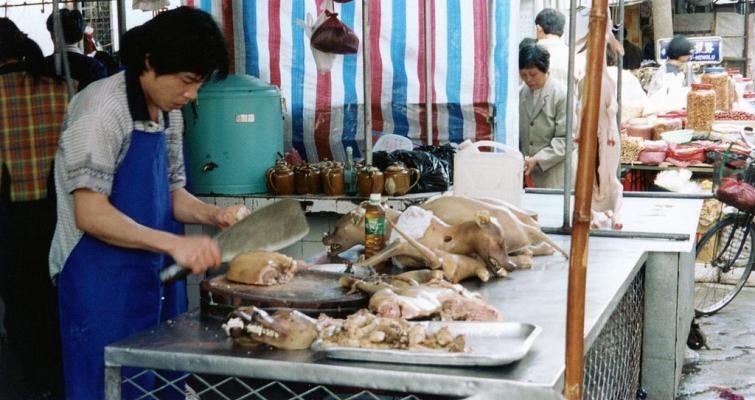
China: Shenzhen bans consumption of cat, dog meat
Shenzhen/UNI: Shenzhen is the first city in China to ban the sale and consumption of dog and cat meat after the novel coronavirus outbreak wreaked havoc in the country, infecting about 81,589 people and killing 3,318.
It comes after the virus outbreak, which has now turned into a global pandemic, was linked to wildlife meat, prompting Chinese authorities to ban the trade and consumption of wild animals.
Shenzhen went a step further, extending the ban to dogs and cats. The new law will come into force on May 1, media reported.
Thirty million dogs a year are killed across Asia for meat, says Humane Society International (HSI).
However, the practice of eating dog meat in China is not that common - the majority of people there have never consumed it and might never do so in future.
"Dogs and cats as pets have established a much closer relationship with humans than all other animals, and banning the consumption of dogs and cats and other pets is a common practice in developed countries and in Hong Kong and Taiwan," the Shenzhen city government said.
"This ban also responds to the demand and spirit of human civilization."
Animal advocacy organisation HSI praised the move.
"This really could be a watershed moment in efforts to end this brutal trade that kills an estimated 10 million dogs and 4 million cats in China every year," said Dr Peter Li, China policy specialist for HSI.
However, at the same time as this ruling, China approved the use of bear bile to treat coronavirus patients.
Bear bile - a digestive fluid drained from living captive bears - has long been used in traditional Chinese medicine.
The active ingredient, ursodeoxycholic acid, is used to dissolve gallstones and treat liver disease. But there is no proof that it is effective against the coronavirus and the process is painful and distressing for the animals.
Brian Daly, a spokesman for the Animals Asia Foundation had advised against relying on wildlife products like bear bile as the solution to combat a deadly virus that appears to have originated from wildlife.
Support Our Journalism
We cannot do without you.. your contribution supports unbiased journalism
IBNS is not driven by any ism- not wokeism, not racism, not skewed secularism, not hyper right-wing or left liberal ideals, nor by any hardline religious beliefs or hyper nationalism. We want to serve you good old objective news, as they are. We do not judge or preach. We let people decide for themselves. We only try to present factual and well-sourced news.
Support objective journalism for a small contribution.


