


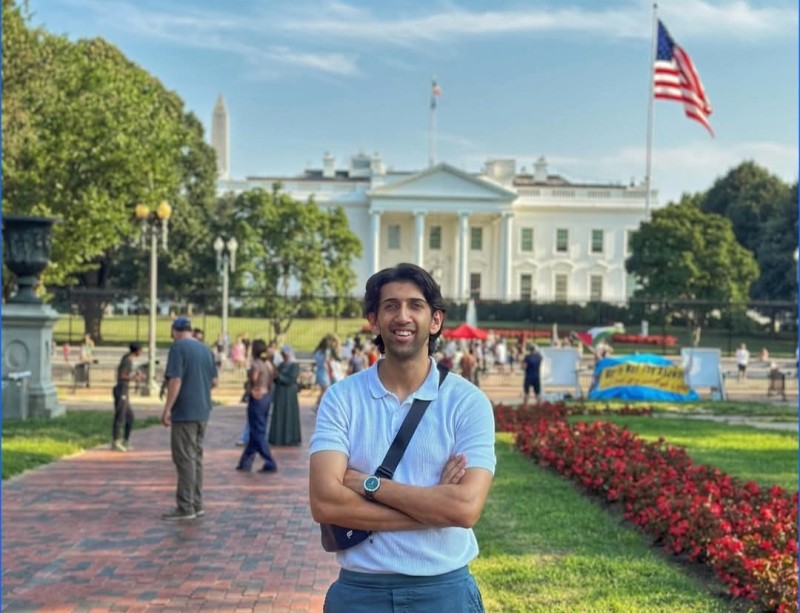
Is Pakistan facing a silent Gen Z revolution? PhD student's op-ed takedown fuels youth anger
A fiery now-deleted op-ed by Pakistani PhD student Zorain Nizamani, the son of actors Fazila Qazi and Qaiser Khan Nizamani, has captured the nation’s attention, exposing the growing divide between the country’s ruling elite and its younger generation.
In his piece, Zorain highlighted how Pakistan’s younger generations, particularly Gen Z and Gen Alpha, are increasingly rejecting the narratives promoted by the government and the military.
Published on January 1 by The Express Tribune under the title “It is Over”, the article was taken down from the website within hours, reportedly on the orders of the Pakistani army.
Despite its removal, screenshots circulated widely on social media, propelling Zorain, previously little known in Pakistan, into the spotlight as a symbol of youth dissent.
The Core Message
In his op-ed, Zorain sharply criticized the disconnect between Pakistan’s ageing power structures and the aspirations of its young population.
Without mentioning the army chief Asim Munir or the Shehbaz Sharif government directly, he wrote:
“For the older men and women in power, it’s over. The young generation isn’t buying any of what you’re trying to sell to them. No matter how many talks and seminars you arrange in schools and colleges, trying to promote patriotism, it isn’t working.”
Zorain, who is pursuing a PhD in criminology at the University of Arkansas, argued that true patriotism emerges only when there is equal opportunity, sound infrastructure, and effective governance.
The op-ed also highlighted Pakistan’s ongoing economic and social challenges. Rising unemployment, which surged by 31% in 2025 according to Dawn, corruption, and a mass exodus of skilled professionals—including over 5,000 doctors and 11,000 engineers in the last 24 months—were cited as reasons why Pakistan’s youth is increasingly disillusioned.
The Youth Perspective
Zorain underscored that while fear and repression may silence overt dissent, Pakistan’s younger generation is taking a “silent, quiet exit” from the country.
“The younger lot has had enough, and because they have learned that they cannot challenge the powers, they’re leaving the country. They’d rather take a silent exit and not look back because their friends, who spoke up, were silenced,” he wrote.
He contrasted the desires of Gen Z with the priorities of older politicians: faster internet versus stronger firewalls, affordable smartphones versus higher taxes on devices, and relaxed freelancing regulations versus tighter restrictions.
Economic pressures, including rising living costs and declining income, further exacerbate the generational divide.
“Your children are abroad, you are making millions every single day, you enjoy vast, unchecked power, you eat the finest of foods and drink only the cleanest of water, why would you care?” Zorain asked.
Reaction and Backlash
The article quickly went viral, sparking widespread discussion. Journalists, activists, and legal professionals praised Zorain for articulating the frustrations of Pakistan’s youth. Former minister Moonis Elahi tweeted:
“Reality check for the generation shaping policy. The disconnect grows clearer by the day. Excellent analysis by Zorain Nizamani.”
Meanwhile, the Pakistan army’s media wing, ISPR, posted rebuttals, reflecting the tension surrounding the piece.
Zorain clarified in a LinkedIn post that he has no political affiliations, "My article was based on my personal observations, my views, and my take on things. I do not carry disdain against anyone; there is enough hatred in the world. Truth is always controversial.”
His mother, Fazila Qazi, echoed the sentiment on Instagram, stating that the piece was a general commentary on youth perceptions and not directed at any specific institution.
Until December 31, 2025, Zorain Nizamani was largely unknown in Pakistan.
By January 2026, he had become a trending figure, representing the frustrations, awareness, and silent rebellion of the country’s younger generation.
Support Our Journalism
We cannot do without you.. your contribution supports unbiased journalism
IBNS is not driven by any ism- not wokeism, not racism, not skewed secularism, not hyper right-wing or left liberal ideals, nor by any hardline religious beliefs or hyper nationalism. We want to serve you good old objective news, as they are. We do not judge or preach. We let people decide for themselves. We only try to present factual and well-sourced news.
Support objective journalism for a small contribution.


