'Enough is enough': Supreme Court refuses to allow new petitions in matters involving Places of Worship Act
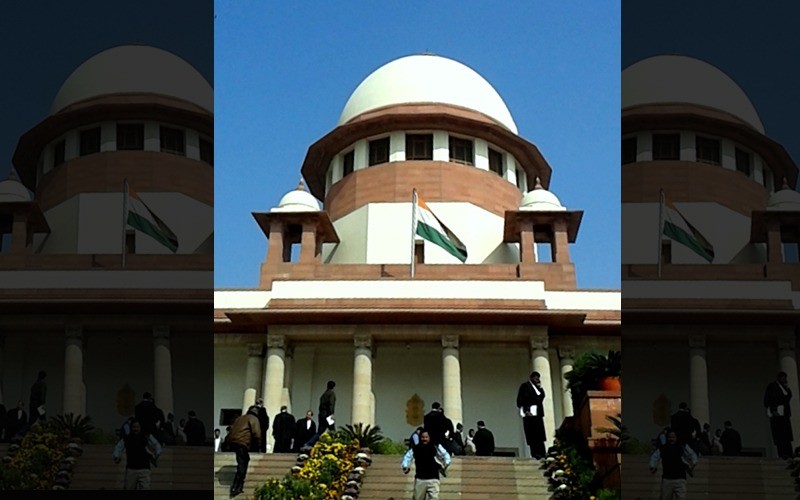
New Delhi/IBNS: The Supreme Court Monday refused to entertain any new petitions in matters involving the Places of Worship Act, 1991, which stops a lawsuit from being filed to reclaim a place of worship or change its character.
"Enough is enough. There has to be an end to this," Chief Justice of India Sanjiv Khanna said during a hearing.
He asserted that the Supreme Court will not hear any new petition in this matter.
The apex court, however, has allowed the filing of an intervention petition with additional grounds though it refused to issue notice on the new petitions filed so far.
The top court's remarks came as it continued hearing petitions on the validity of the Places of Worship Act, which assumes significance given the legal efforts to reclaim demolished Hindu temples.
The law was passed in 1991 to disallow the change of religious character of a place of worship as it existed on August 15, 1947. The Ram Janmabhoomi dispute was kept out of its purview.
The original plea regarding the law's validity was filed by Ashwini Kumar Upadhyay.
However, the court last year stopped proceedings into 18 lawsuits by Hindu parties seeking to reclaim 10 mosques and tagged together all matters related to temple-mosque disputes.
This includes the Shahi Idgah-Krishna Janmbhoomi, Kashi Vishwanath-Gyanvapi mosque, and Sambhal mosque disputes.
While the opposition favoured the law, the ruling BJP has opposed it.
The Congress, which was in power when the law was passed, and Asaduddin Owaisi's AIMIM are the latest political parties to have moved the Supreme Court seeking that the law be strictly implemented.
Another petitioner who appeared in the court on Monday told the court that the law should be upheld since everyone deserves to live peacefully.
During the hearing, the CJI noted it had allowed the filing of new petitions last time, but there must be a limit to such interventions.
"Application for fresh interventions will be allowed given it raised some ground which is not raised as yet," said CJI Khanna.
Support Our Journalism
We cannot do without you.. your contribution supports unbiased journalism
IBNS is not driven by any ism- not wokeism, not racism, not skewed secularism, not hyper right-wing or left liberal ideals, nor by any hardline religious beliefs or hyper nationalism. We want to serve you good old objective news, as they are. We do not judge or preach. We let people decide for themselves. We only try to present factual and well-sourced news.
Support objective journalism for a small contribution.