 Cyber Security
BCC&I Session: Experts say India is emerging as a global cybersecurity power
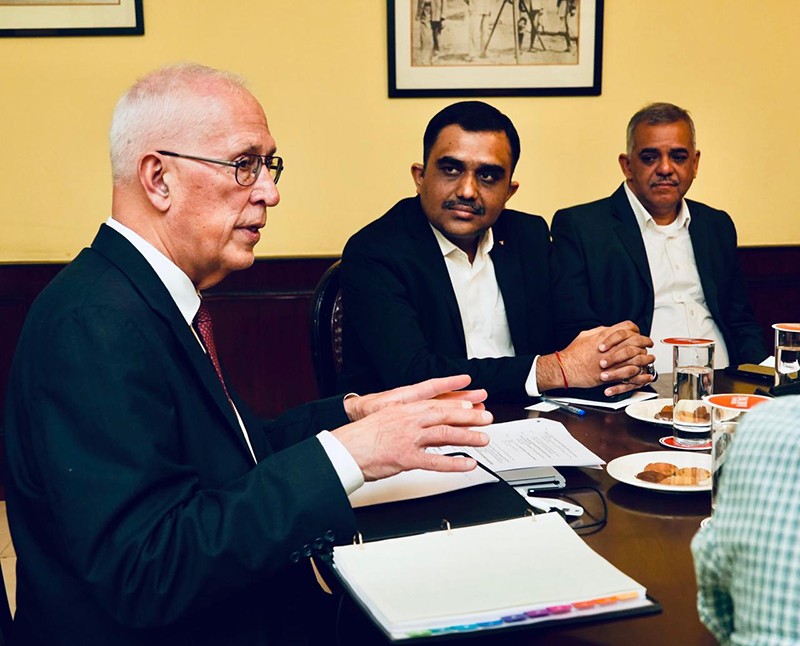
A special session organised by U.S. Consulate Kolkata at The Bengal Chamber of Commerce and Industry (BCC&I) concluded that despite regulatory challenges and persistent technical vulnerabilities, India’s strategic emphasis on in-house development and the rapid strengthening of its cybersecurity operations workforce position the country as a resilient player in the global security ecosystem.
The session was addressed by Dr. James Lerums of Purdue University’s Center for Education and Research in Information Assurance and Security (CERIAS) and was attended by leading Indian industry executives, including Kaushik Saha, Group Chief Information Security Officer and Head of Digital Infrastructure at RPSG Group; N.K. Ghosal, Director of NKG & Associates; Angshuman Bhattacharya, AVP at Adani AI Labs; Vivek Suthar, Head of IT at Birla Corporation; and Surbhit Lihala, Vice President–IT at Keventer Agro.
Discussions at the session highlighted a shift in cybersecurity strategy from reactive defence mechanisms to proactive, data-driven resilience. Central to this transition is the proposed Public-Private Cybersecurity Scorecard, a metric-based framework designed to improve transparency and accountability between government regulators and private sector operators.
The scorecard approach, pioneered by Dr. Lerums, aims to provide measurable benchmarks for assessing the cybersecurity posture of critical infrastructure sectors, including energy, water, and other essential utilities.
Who is Dr. James Lerums?
Dr. James Lerums is a Graduate Faculty member in the Computer Information and Technology Department at Purdue University and a scholar at CERIAS. His research focuses on cybersecurity operations, as well as the social, economic, and legal dimensions of information security. His work also emphasises “right-sizing” cybersecurity solutions based on an organisation’s strategic objectives and operational requirements.
His master’s research introduced operational frameworks to accelerate cybersecurity improvements in critical infrastructure industrial control systems. His doctoral research developed a cybersecurity scorecard model that enabled the US state of Indiana to assess and measure cybersecurity preparedness across public and private critical infrastructure and key resource sectors.
Support Our Journalism
We cannot do without you.. your contribution supports unbiased journalism
IBNS is not driven by any ism- not wokeism, not racism, not skewed secularism, not hyper right-wing or left liberal ideals, nor by any hardline religious beliefs or hyper nationalism. We want to serve you good old objective news, as they are. We do not judge or preach. We let people decide for themselves. We only try to present factual and well-sourced news.
Support objective journalism for a small contribution.