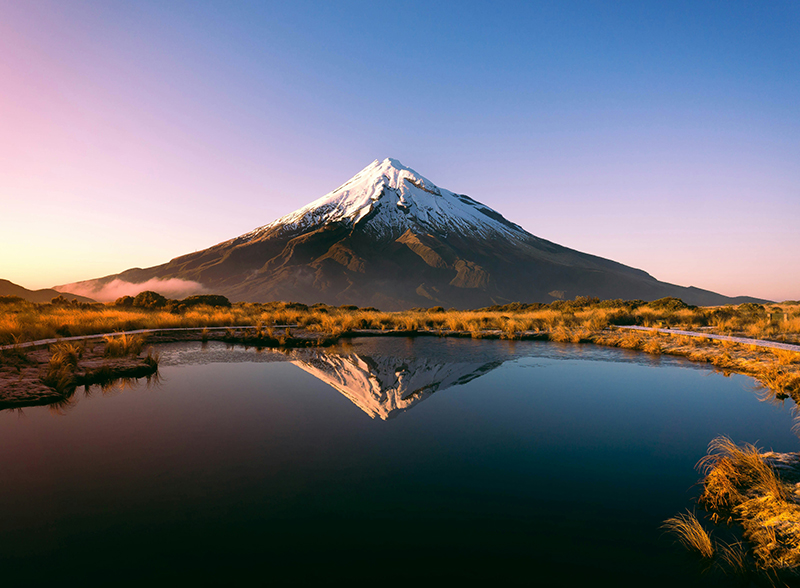
 New Zealand
Several New Zealand glaciers are on the verge of extinction ami hot temperatures
Many New Zealand glaciers are on the verge of extinction due to hotter temperatures. This is the culmination of more than 45 years of research, which is painting a grave picture of the state of the country's iconic glaciers.
"We've had a flurry of harsh summers and repeated marine heatwaves that have caused warm air to cook our glaciers," Andrew Lorrey from the National Institute of Water and Atmospheric Research (NIWA) said on Wednesday.
As part of the annual snowline survey, New Zealand scientists have documented ice cover for the Southern Alps since the late 1970s by taking aerial photographs of the snowline position at the end of summer.
These photos are then put into a 3D model, which shows how glacier volume has changed, Lorrey said, adding that this has provided a long, nearly unbroken record of ice loss.
NIWA estimates that at least 13 trillion litres of water have been lost from the iconic New Zealand glaciers since the late 1970s, which is the equivalent of nearly five decades of basic household water use for the whole country.
The 19th-century paintings by artist John Gully captured an ice retreat already underway in the mid-1800s, which depicted vast and vivid snow cover across New Zealand's mountains and documented the beginning of their retreat, Lorrey said.
Simultaneously, researchers based at the University of Otago and Victoria University of Wellington have conducted a programme measuring glacier change at Brewster Glacier, located in Mount Aspiring National Park, since the early 2000s.
Nicolas Cullen from the University of Otago has been working on snow probing by installing stakes into the ice with a steam drill to measure how much snow and ice is gained and lost over each season, which has become a global benchmark for understanding how glaciers in the Southern Hemisphere are responding to climate change, Cullen said.
Shaun Eaves from Victoria University of Wellington has done mapping around the summit region of Mount Ruapehu, which shows small glaciers there disappearing fast.
Many are reduced to slivers of ice covered with a thin veneer of debris, and some are going extinct in the years ahead, Eaves said.
While the overall findings are bleak, there is still time to make a difference by reducing carbon emissions to halt the increase in global warming, Lorrey said.
(With UNI inputs)
Support Our Journalism
We cannot do without you.. your contribution supports unbiased journalism
IBNS is not driven by any ism- not wokeism, not racism, not skewed secularism, not hyper right-wing or left liberal ideals, nor by any hardline religious beliefs or hyper nationalism. We want to serve you good old objective news, as they are. We do not judge or preach. We let people decide for themselves. We only try to present factual and well-sourced news.
Support objective journalism for a small contribution.