Environment and health at increasing risk from growing weight of ‘e-waste’
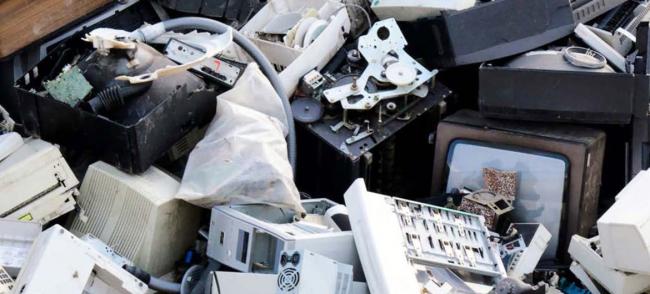
New York, Jan 25 (IBNS): Around 50 million tonnes of electronic waste, or e-waste, is being thrown away each year, according to a new joint United Nations report – which exceeds the combined weight of all the commercial airliners ever made, or alternatively, enough Eiffel Towers to fill the whole of Manhattan.
To highlight the rising challenge posed by mountains of discarded electronics worldwide, seven UN entities came together to launch the report at the World Economic Forum in Davos, Switzerland, on Thursday, in a bid to offer some solutions to a behemoth-sized problem that is making the world sicker and adding to environmental degradation.
The joint report, entitled, “A New Circular Vision for Electronics – Time for a Global Reboot”, calls for a new vision for e-waste based on the “circular economy” concept, whereby a regenerative system can minimize waste and energy leakage.
“E-waste is a growing global challenge that poses a serious threat to the environment and human health worldwide”, said Stephan Sicars, Director of the Department of Environment at the UN Industrial Development Organization. “To minimize this threat, UNIDO works with various UN agencies and other partners on a range of e-waste projects, all of which are underpinned by a circular economy approach”.
According to the report, a deliberative process must be instilled to change the system – one that collaborates with major brands, small and medium-sized enterprises, academia, trade unions and civil society.
“Thousands of tonnes of e-waste is disposed of by the world’s poorest workers in the worst of conditions, putting their health and lives at risk”, maintained Guy Ryder, Director-General, International Labour Organization (ILO). “We need better e-waste strategies and green standards as well as closer collaboration between governments, employers and unions to make the circular economy work for both people and planet.”
Despite growing e-waste, “A New Circular Vision” points to the importance of technologies from the so-called Internet of Things – a network of devices that contain electronics and the connectivity that allows them to exchange data – through to cloud computing advances, which can all result in smarter recycling and tracking of e-waste.
“A circular economy brings with it tremendous environmental and economic benefits for us all” said Joyce Msuya, Acting Executive Director, UN Environment Programme (UN Environment). “Our planet’s survival will depend on how well we retain the value of products within the system by extending their life.”
The report supports the work of the E-waste Coalition, which includes International Labour Organization (ILO); International Telecommunication Union (ITU); United Nations Environment Programme (UN Environment); United Nations Industrial Development Organization (UNIDO); United Nations Institute for Training and Research (UNITAR); United Nations University (UNU) and Secretariats of the Basel and Stockholm Conventions.
Source: ITU
Support Our Journalism
We cannot do without you.. your contribution supports unbiased journalism
IBNS is not driven by any ism- not wokeism, not racism, not skewed secularism, not hyper right-wing or left liberal ideals, nor by any hardline religious beliefs or hyper nationalism. We want to serve you good old objective news, as they are. We do not judge or preach. We let people decide for themselves. We only try to present factual and well-sourced news.
Support objective journalism for a small contribution.