 Deforestation
Decade of slowing deforestation offers hope for forests: FAO data
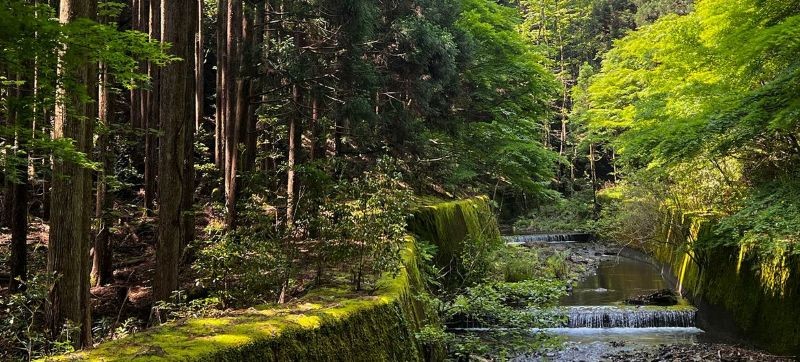
Lush, green and brimming with trees and wildlife, forests are the Earth’s lungs and source of livelihoods for many communities.
Nearly 500 million hectares (ha) – equivalent to around 750 million football pitches – have been lost since 1990.
Deforestation has slowed down in every region of the world in the past decade, however, according to the UN Food and Agriculture Organization (FAO).
Deforestation refers to the loss of forest or its conversion for other use, such as urban use or wasteland.
Every year for the past decade, the world has been losing around 10.9 million ha of forest. That rate is an improvement compared to the 13.6 million ha being lost annually in the previous period, and the 17.6 million before that.
Who monitors forests?
The hopeful trend was revealed on Tuesday in the FAO’s latest forest assessment report, which is published every five years.
It provides a comprehensive analysis of global and regional forest trends using data collected from remote sensing – an advanced process using imaging and satellites – and country reporting.
Through international agreements focused on addressing climate change, such as the Paris Agreement, the UN promotes a collective approach to protecting the environment.
Assessments like the FAO’s forest report monitor if countries are on track with the UN treaties and frameworks they have signed up to.
Qu Dongyu, the agency’s director-general, said that the data produced by these assessments serves many purposes “from informing the global community of the status of forests and their changes, to supporting decisions, policies and investments related to forests and the ecosystem services they provide.”
How are forests preserved?
One fifth of the world’s forests are in legally established protected areas – that’s 251 million ha of additional protected forest since 1990 – according to the assessment. Asia has the highest share among all regions, with 26 per cent forest covered.
Beyond protection orders, over half of all forests are managed. That means that the land is either being used to produce timber, fibre and bioenergy, or for the protection of soil and water and the conservation of biodiversity – or for tourism, among other uses. In Europe, a staggering 94 per cent of forests are managed.
If forests are managed, who owns them? As of 2020, 71 per cent of the world’s forests are under public ownership. In North and Central America, Indigenous Peoples and local communities owned 41.6 million ha of forest.
Fires, insects, diseases
Last year, FAO linked the increasing risk of wildfires and pests to climate change.
Fire remains a prevalent threat and affects an average of 261 million hectares of land annually, nearly half of which is forested.
An additional 41 million ha of forests was damaged by insects, diseases and severe weather events in 2020.
Contributing to the efforts to monitor and protect forests, a special Forest Pavilion will promote biodiversity conservation and sustainable development during next month’s upcoming COP30 UN climate conference in Brazil.
Support Our Journalism
We cannot do without you.. your contribution supports unbiased journalism
IBNS is not driven by any ism- not wokeism, not racism, not skewed secularism, not hyper right-wing or left liberal ideals, nor by any hardline religious beliefs or hyper nationalism. We want to serve you good old objective news, as they are. We do not judge or preach. We let people decide for themselves. We only try to present factual and well-sourced news.
Support objective journalism for a small contribution.