


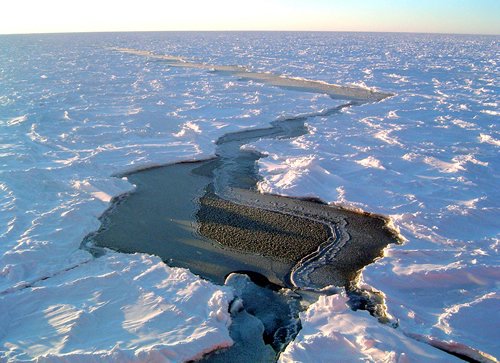
Arctic Sea ice reached minimum extent on September 13 this year
NSIDC is part of the Cooperative Institute for Research in Environmental Sciences at the University of Colorado Boulder, US.
According to NSIDC, on September 13, Arctic sea ice appears to have reached its seasonal minimum extent of 4.64 million square kilometers (1.79 million square miles), the eighth lowest in the 38-year satellite record.
The overall rate of ice loss this summer was slowed by a persistent pattern of low sea level pressure focused over the central Arctic Ocean, said the Center.
NSIDC also said that this is a preliminary announcement. Changing winds or late-season melt could still reduce the Arctic ice extent, as happened in 2005 and 2010. NSIDC scientists will release a full analysis of the Arctic melt season, and discuss the Antarctic winter sea ice growth, in early October.
The importance of the Arctic sea ice lies in the fact that it keeps the polar regions cool and helps moderate global climate, according to the Center.
Sea ice has a bright surface; 80 percent of the sunlight that strikes it is reflected back into space. As sea ice melts in the summer, it exposes the dark ocean surface. Instead of reflecting 80 percent of the sunlight, the ocean absorbs 90 percent of the sunlight. The oceans heat up, and Arctic temperatures rise further.
A small temperature increase at the poles leads to still greater warming over time, making the poles the most sensitive regions to climate change on Earth.
According to scientific measurements, both the thickness and extent of summer sea ice in the Arctic have shown a dramatic decline over the past thirty years.
This is consistent with observations of a warming Arctic, said NSIDC on its website.
The loss of sea ice also has the potential to accelerate global warming trends and to change climate patterns.
Meanwhile in response to the announcement from the NSIDC on the Arctic summer sea ice extent, World Wildlife Fund (WWF) released the following statement from David Aplin, interim managing director of the US Arctic team:
“This summer’s nearly record low sea ice levels are yet another reminder of the massive change occurring in the Arctic, and communities and wildlife alike are already feeling the impacts. Given the unraveling of the sea ice system, action is urgently needed to avert other risks and threats to the region.
“For this reason, the potential for offshore oil drilling is misguided and risky. Burning more fossil fuels only accelerates warming and puts the region’s future in even more danger. It’s time to expedite our nation's transition to a renewable energy rather increase our reliance on fossil fuels.”
Image: NSIDC News/Twitter
Support Our Journalism
We cannot do without you.. your contribution supports unbiased journalism
IBNS is not driven by any ism- not wokeism, not racism, not skewed secularism, not hyper right-wing or left liberal ideals, nor by any hardline religious beliefs or hyper nationalism. We want to serve you good old objective news, as they are. We do not judge or preach. We let people decide for themselves. We only try to present factual and well-sourced news.
Support objective journalism for a small contribution.


