U.S. cotton exports to India surge as China demand dips and prices fall: Report
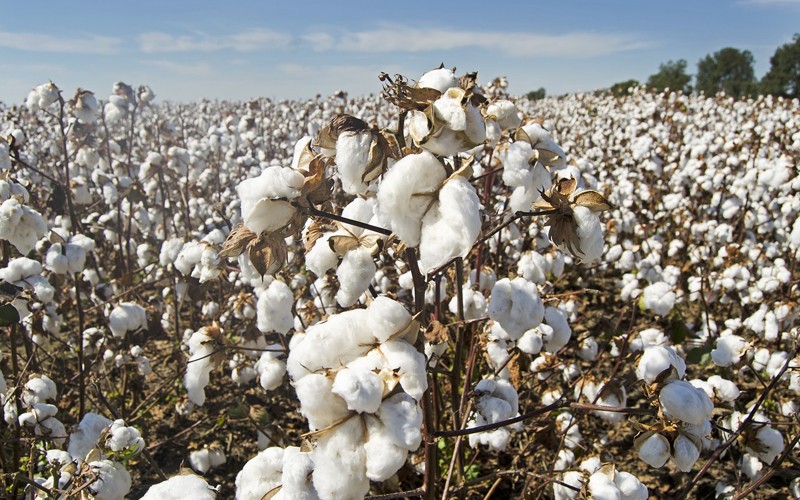
New Delhi: U.S. upland cotton exports to India have seen a sharp increase in recent months, driven by falling American cotton prices, escalating global tariff disputes, and a surge in demand from India, Reuters reported, citing industry experts.
According to data from the U.S. Department of Agriculture (USDA), exports to India between February and April rose to 155,260 running bales—up from 25,901 bales in the same period last year.
Weekly exports peaked during the week of February 20, reaching their highest level in over two and a half years.
The spike in Indian demand coincides with deepening trade tensions between the United States and China, where U.S. cotton exports have fallen.
On Friday, China’s finance ministry announced plans to raise tariffs on U.S. goods to 125%, up from the previously declared 84%.
With China’s import appetite waning, American upland cotton—particularly from Texas and surrounding regions—is increasingly being absorbed by the Indian market, said Ajay Kedia, director at Kedia Advisors.
Justin Cardwell, head of research and technology at Alternative Option, also noted that U.S. exports to China are projected to decline further.
India, the world’s second-largest cotton producer after China, has become a net importer due to declining domestic yields, despite its significant role in processing and exporting cotton yarn globally.
Typically, India imports Extra Long Staple (ELS) cotton from the U.S., which enjoys a 10% duty exemption—unlike short staple cotton that attracts an 11% import duty.
"The U.S. ELS cotton remains cost-effective for many Indian buyers due to its higher ginning efficiency, better lint yield, and superior fibre quality," Kedia added.
This year, the Cotton Association of India (CAI) revised its production estimate downward by 250,000 bales to 30.1 million bales, reflecting a 7.84% year-on-year drop from the 2023–24 season.
So far in 2025, ICE cotton futures have fallen nearly 5%, the report said.
India could face a supply gap of 2.5 million bales this year, which may be met through additional imports, said Y. G. Prasad, director of the Central Institute for Cotton Research.
According to CAI projections, India’s cotton imports in the 2024–25 season are likely to double due to declining output.
Apart from the U.S., India also sources cotton from Australia, Brazil, and Egypt.
Support Our Journalism
We cannot do without you.. your contribution supports unbiased journalism
IBNS is not driven by any ism- not wokeism, not racism, not skewed secularism, not hyper right-wing or left liberal ideals, nor by any hardline religious beliefs or hyper nationalism. We want to serve you good old objective news, as they are. We do not judge or preach. We let people decide for themselves. We only try to present factual and well-sourced news.
Support objective journalism for a small contribution.