

 MDR
MDR
MDR charges on UPI implementation postponed till this date! What do customers and merchants need to know now?
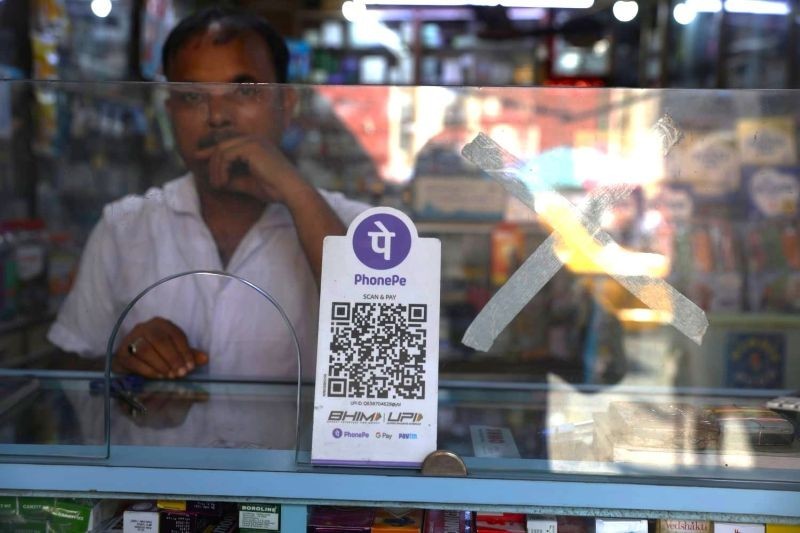
The implementation of Merchant Discount Rate (MDR) charges on select Unified Payments Interface (UPI) transactions has been deferred until after Diwali, following requests from trader bodies and payment industry stakeholders.
“Keeping in mind the festive season, the UPI and Services Steering Committee today (October 13) decided that MDR on select Person-to-Merchant (P2M) UPI transactions shall be implemented immediately post Diwali,” the National Payments Corporation of India (NPCI) said in a statement on Tuesday.
UPI MDR on Select Merchant Transactions Shall be Implemented Post Diwali Press Release Link: https://t.co/5KMjOP0tHd https://t.co/pD8IKfN6sR
— NPCI (@NPCI_NPCI) October 13, 2026
The rollout was earlier scheduled for October 15.
According to a Moneycontrol report, merchant bodies, fintech companies and payment service providers had urged NPCI to postpone the implementation, citing concerns about consumer sentiment during the festive shopping season. Stakeholders also sought clarity on the varying MDR rates, policies and their applicability to different categories of UPI transactions.
The delay is expected to give payment companies and other stakeholders additional time to prepare for the changes, which come amid heightened consumer spending during the Durga Puja and Diwali festive season.
Will UPI Payments Become Chargeable?
The proposed changes will not affect all UPI transactions. Person-to-person (P2P) transfers will continue to remain free, irrespective of the amount transferred.
According to the Ministry of Finance, merchant payments of up to ₹2,000, along with transactions covered under the zero-MDR framework for small merchants, will also remain free.
Consequently, approximately 96% of all person-to-merchant transactions are expected to remain unaffected. MDR will apply only to specified merchant transactions above ₹2,000, subject to the applicable rates and exemptions.
What Will Remain Free?
All Person-to-Person Transactions
All person-to-person (P2P) UPI transactions will remain free, irrespective of the amount transferred.
Individuals will not be charged a transaction fee for sending or receiving money through UPI under the proposed MDR framework. According to the Ministry of Finance, P2P transactions account for a significant share of UPI activity and will remain outside the MDR framework.
Merchant Payments Up to ₹2,000
All eligible person-to-merchant (P2M) UPI transactions of up to ₹2,000 will remain exempt from MDR.
Customers will not have to pay a transaction charge when making such payments through UPI.
Payments Received by Small Merchants
Small merchants covered under the zero-MDR framework will continue to benefit from exemptions.
This includes eligible street vendors and neighbourhood businesses receiving payments through UPI QR codes under the Person-to-Person-Merchant (P2PM) category, subject to the applicable eligibility conditions and monthly receipt limits.
The exemption is intended to protect small businesses from additional payment acceptance costs and encourage the wider adoption of digital payments.
Which UPI Transactions Will Attract MDR?
1. Merchant Transactions Above ₹2,000
A nominal MDR of 0.4% will apply to specified P2M transactions exceeding ₹2,000, subject to the applicable exemptions and transaction categories.
The charge will be distributed among participants in the payments ecosystem, including banks, payment service providers and UPI application providers.
For transactions of ₹75,000 and above, the MDR will be capped at ₹300 per transaction.
2. Transactions in Essential Sectors
Transactions exceeding ₹2,000 in specified essential and thin-margin sectors, including railways, telecommunications, insurance, fuel and agricultural inputs, will attract a flat MDR of ₹5 per transaction.
The flat charge is intended to provide greater cost certainty for businesses operating in essential services and sectors with narrow profit margins.
3. Capital Market Transactions
Payments relating to mutual funds, securities, stockbrokers and dealers will attract an MDR of 0.02%, capped at ₹300 per transaction.
The lower rate is intended to keep digital payment acceptance costs relatively low for transactions involving financial markets.
Will Customers Have to Pay MDR?
No. MDR is a charge within the merchant payment ecosystem and is not intended to be levied directly on customers making UPI payments.
Banks have been advised to ensure that merchants do not pass on MDR charges to customers. UPI application providers are also prohibited from imposing platform fees or hidden charges under the stated framework.
Individuals will continue to have access to free P2P UPI transactions without monthly quotas or volume-based restrictions under the MDR framework.
Daily transaction limits prescribed by banks and NPCI, which generally vary by transaction category and may range from ₹1 lakh to ₹5 lakh, are security and risk-management measures. They are not thresholds for imposing transaction charges.
Why Will Most Merchant Transactions Remain Unaffected?
According to the figures cited in the proposed framework, MDR will apply to only around 4% of merchant transactions.
Approximately 96% will remain unaffected because they fall below the ₹2,000 threshold or qualify for exemptions under the zero-MDR framework for small merchants.
The framework is intended to protect individual users, micro-enterprises and small businesses while introducing charges on a limited category of larger merchant transactions.
Government to Set Up Fund to Support Small Merchants
The Ministry of Finance has said that a dedicated fund will be established to promote UPI adoption among small merchants.
An amount equivalent to 5% of total MDR collections will be contributed to the fund. The money will be used to support wider UPI acceptance, sustained usage and the inclusion of small businesses in India's digital payments ecosystem.
Why Is the Government Introducing MDR?
In its frequently asked questions (FAQs) on the proposed changes, the Ministry of Finance said MDR collections would help support the infrastructure underpinning India's digital payments system.
“UPI processes billions of transactions every month. The MDR is distributed only amongst the UPI ecosystem, to further invest into infrastructure resiliency, innovation, cybersecurity (protecting the UPI Infrastructure with banks and non-banks) and customer service,” the ministry said.
It added that UPI charges remain significantly lower than those associated with other payment instruments, including credit cards, debit cards and wallets.
“The charges are kept very reasonable and will be applicable only for transactions above ₹2,000 to ensure UPI remains the most affordable mode of accepting payments,” the ministry said.
Support Our Journalism
We cannot do without you.. your contribution supports unbiased journalism
IBNS is not driven by any ism- not wokeism, not racism, not skewed secularism, not hyper right-wing or left liberal ideals, nor by any hardline religious beliefs or hyper nationalism. We want to serve you good old objective news, as they are. We do not judge or preach. We let people decide for themselves. We only try to present factual and well-sourced news.
Support objective journalism for a small contribution.