World food prices dip to lowest level since July 2010
The continuing decline, lowest level since July 2010, reflects a robust supply environment and ongoing weakness in many currencies versus the United States dollar, Michael Griffin, FAO's dairy and livestock market expert, confirmed in a statement today.
“The first thing to flag is the favourable outlook for production of a number of crops in 2015,” he said, adding that “stocks are also very strong” for most cereals.
The FAO’s monthly Food Price Index, a trade-weighted index that tracks prices of five major food commodity groups on international markets, averaged 179.4 points in February, down from 181.2 points in January and 208.6 points in February 2014.
The index measures the price of cereal, sugar, meat, dairy and vegetable oils.
The Cereal Price Index averaged 171.7 points in February, down 3.2 per cent from January, with booming prospects for wheat output explaining the bulk of the decline.
On sugar, the price index averaged 207.1 points in February, down 4.9 per cent from January, the sharpest move of any commodity.
This sugar drop reflects optimism on production prospects in Brazil after recent rainfalls, as well as India's decision to subsidize exports to boost sugar sales abroad, the Rome-based FAO said.
The Meat Price Index averaged 187.4 points in February, also down 1.4 per cent from its revised January value. Beef and mutton prices declined, largely due to a stronger US dollar against the Brazilian real and the Australian dollar.
Pig-meat prices rose for the first time in eight months, helped up by Europe’s decision to provide aid for private storage in the sector.
Dairy’s price index rose for the first time in a year, driven by milk powders and reflecting both a seasonal slowdown in European output as the season draws to a close and a crimped supply from New Zealand and Australia.
Vegetable Oil Price Index averaged 156.6 points, up 0.4 per cent from January, reflecting a sizeable rise in palm oil prices – resulting from recent floods in Malaysia and from a hike in Indonesian domestic biofuel subsidies expected to stoke demand.
FAO has also raised its estimate of 2014 world cereal production, with the bulk of the increase reflects wheat production gains in Argentina, Central Asia and Europe. Globally, 1.1 billion tonnes of cereals are forecast to be used for food consumption in 2014/15.
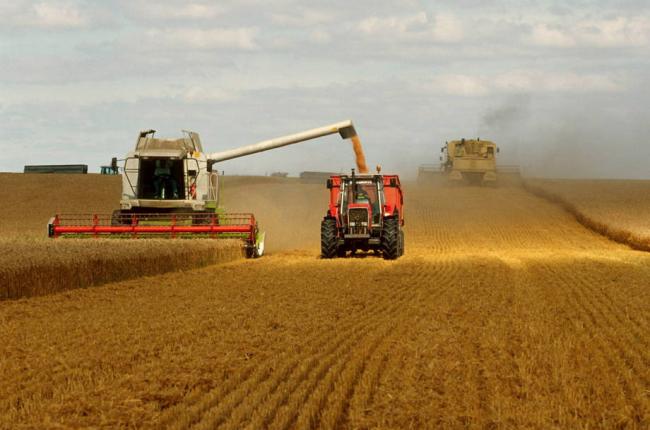
Photo: FAO/Olivier Thuillier
Support Our Journalism
We cannot do without you.. your contribution supports unbiased journalism
IBNS is not driven by any ism- not wokeism, not racism, not skewed secularism, not hyper right-wing or left liberal ideals, nor by any hardline religious beliefs or hyper nationalism. We want to serve you good old objective news, as they are. We do not judge or preach. We let people decide for themselves. We only try to present factual and well-sourced news.
Support objective journalism for a small contribution.