


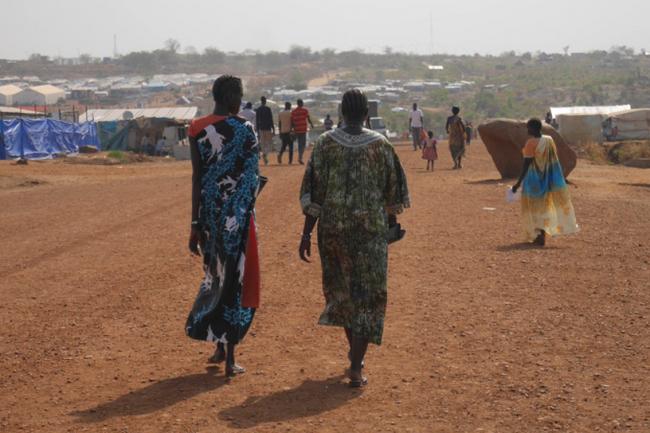
Women in Africa 'being left behind' in fight against HIV/AIDS: UN report
In the sub-Saharan region, AIDS-related illnesses remain the leading cause of death among girls and women of reproductive age.
In 2013, 74 per cent of new HIV infections among African adolescents were among adolescent girls, the Joint UN Programme on HIV/AIDS (UNAIDS) said in a statement.
Young women and adolescent girls acquire HIV on average five to seven years earlier than young men, and in some countries in the region, HIV prevalence among this population can be as much as seven times that of their male counterparts.
“In the absence of a vaccine, ending gender-based violence, keeping girls in school and empowering young women and adolescent girls are the best options we have available,” Sheila Tlou, UNAIDS Regional Director for Eastern and Southern Africa, said.
In order to guide regional and global advocacy and inform political dialogue on HIV prevention and treatment among young women and adolescent girls, UNAIDS and the African Union have launched a joint report entitled Empower young women and adolescent girls: Fast-Tracking the end of the AIDS epidemic in Africa.
The document outlines three political commitments to advance the rights and empowerment of Africa’s young women and girls to help Fast-Track an AIDS response firmly rooted in gender equality and social justice.
The commitments are to stop new HIV infections among young women and adolescent girls in order to ensure that AIDS is no longer the leading cause of death among adolescents; to empower young women and adolescent girls through comprehensive sexuality education; and to prevent HIV infections among children and keep their mothers alive.
“As we work with our communities, our networks, our health service providers and our governments, we must commit to demanding a comprehensive focus on young women in the AIDS response,” said Rosemary Museminali, UNAIDS Representative to the African Union.
The report launched 8 June as part of the 26th Gender is My Agenda Campaign pre-summit to the African Union meeting in Johannesburg, South Africa.
Photo: UNAIDS
Support Our Journalism
We cannot do without you.. your contribution supports unbiased journalism
IBNS is not driven by any ism- not wokeism, not racism, not skewed secularism, not hyper right-wing or left liberal ideals, nor by any hardline religious beliefs or hyper nationalism. We want to serve you good old objective news, as they are. We do not judge or preach. We let people decide for themselves. We only try to present factual and well-sourced news.
Support objective journalism for a small contribution.


