


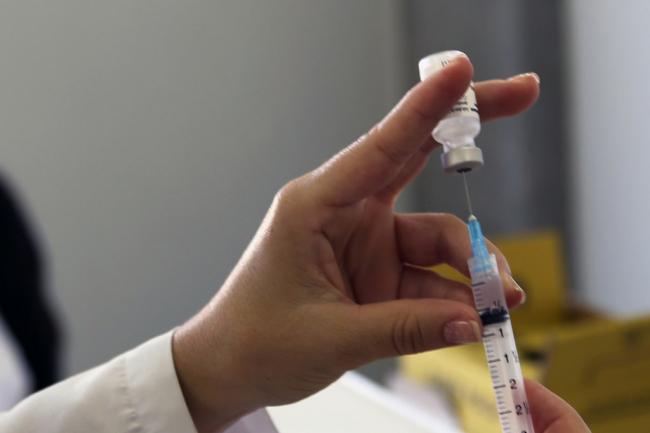
WHO urges global switch to smart syringes by 2020
“Adoption of safety-engineered syringes is absolutely critical to protecting people worldwide from becoming infected with HIV, hepatitis and other diseases. This should be an urgent priority for all countries,” Dr. Gottfried Hirnschall, Director of the WHO HIV/AIDS Department, said in the announcement by the UN health agency.
A 2014 study sponsored by WHO, which focused on the most recent available data, estimated that in 2010, up to 1.7 million people were infected with hepatitis B virus, up to 315,000 with hepatitis C virus and as many as 33,800 with HIV through an unsafe injection.
“The new ‘smart’ syringes WHO recommends for injections into the muscle or skin, have features that prevent re-use,” according to the announcement.
The announcement also said, “Some models include a weak spot in the plunger that causes it to break if the user attempts to pull back on the plunger after the injection. Others have a metal clip that blocks the plunger so it cannot be moved back, while in others the needle retracts into the syringe barrel at the end of the injection.”
The new WHO injection safety guidelines with support from the IKEA Foundation and Gavi, the Vaccine Alliance, also provided recommendations highlighting the value of safety features for syringes, including devices that protect health workers.
“Syringes are also being engineered with features to protect health workers from ‘needle stick’ injuries and resulting infections,” WHO said.
It also said, “A sheath or hood slides over the needle after the injection is completed to protect the user from being injured accidentally by the needle and potentially exposed to an infection.”
WHO said it is urging countries to transition, by 2020, to the exclusive use of the new “smart” syringes, except in a few circumstances in which a syringe that blocks after a single use would interfere with the procedure.
Syringes without safety features currently cost 3 to 4 cents when procured by a UN agency for a developing country and the new smart syringes cost at least twice that much, but WHO said it is calling on donors to support the transition, anticipating that prices will decline over time.
Noting that injections are one of the most common health-care procedures used around the world, WHO stressed the need to reduce the number of unnecessary injections as a critical way of reducing risk.
“There are 16 billion injections administered every year” but only some 5 per cent of these injections are for immunizing children and adults, and 5 per cent are for other procedures like blood transfusions and injectable contraceptives,” the WHO statement said.
The remaining 90 per cent of injections are given to administer medicines, according to WHO.
Finally, WHO said “unsafe injection practices would logically impact on other blood borne diseases transmitted through the reuse of injection equipment e.g. haemorrhagic fevers such as Ebola and Marburg viruses, malaria, and others.”
Photo: PAHO/WHO
Support Our Journalism
We cannot do without you.. your contribution supports unbiased journalism
IBNS is not driven by any ism- not wokeism, not racism, not skewed secularism, not hyper right-wing or left liberal ideals, nor by any hardline religious beliefs or hyper nationalism. We want to serve you good old objective news, as they are. We do not judge or preach. We let people decide for themselves. We only try to present factual and well-sourced news.
Support objective journalism for a small contribution.


