 Bangladesh
Weak policing, polls uncertainty pose high risk to Bangladesh's economy, says World Bank
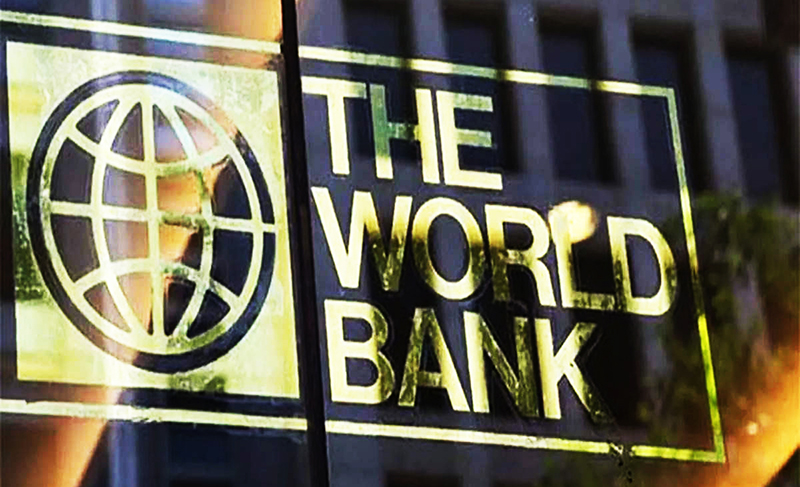
Dhaka/IBNS: The World Bank (WB) has identified three major risks to Bangladesh’s economy and development: law and order concerns, uncertainty surrounding the upcoming general election, and weaknesses in the financial sector.
These issues, according to the WB, have heightened downside risks and created significant uncertainties for the country's future.
In its recent report titled "Bangladesh Development Update: Creating Jobs for a Better Future", the WB outlined five key reform priorities to address these risks.
The report noted that, while the interim government is focused on maintaining law and order, restoring full operational capacity to the police force may take time due to extensive damage to police infrastructure.
"Concerns over safety and security persist and are expected to continue until the police force is fully restored, which could impact the recovery of economic activities," the WB stated.
Another key risk highlighted is the uncertainty over the timing of the next general election.
The WB warned that ongoing disagreements between political parties and the interim government about the election date could further heighten political tensions.
In the financial sector, despite ongoing reforms, the WB said the sector remains vulnerable to shocks.
Unexpected natural disasters could also disrupt food production, driving up food inflation and keeping overall inflation higher than anticipated in the medium term.
Despite these challenges, Bangladesh has shown remarkable resilience in the face of adversity, said Abdoulaye Seck, the WB's country director for Bangladesh and Bhutan.
Speaking at the report’s launch, Seck expressed confidence that with bold and urgent reforms, Bangladesh could return to a path of strong, inclusive growth that would create millions of jobs for its young population.
The WB forecasted that Bangladesh's GDP growth would slow to 4 percent this fiscal year, the lowest since the pandemic, before accelerating to 5.5 percent by the 2025-26 fiscal year.
The wide range of projections reflects the significant uncertainties affecting the outlook.
On the demand side, growth deceleration will be driven by slower private consumption, investment, and exports, amid high inflation, tight financing conditions, and supply disruptions.
On the supply side, industrial growth is expected to remain subdued in the short term, while recent floods are anticipated to moderate agricultural growth.
Inflation is projected to decrease slightly, from 9.7 percent in the previous fiscal year to 9 percent this year, but will remain elevated due to high food and import prices and supply disruptions.
The effectiveness of the central bank's monetary policy and the government's fiscal strategy will be crucial in managing inflation.
Additionally, the adoption of the crawling peg for the exchange rate is expected to stabilize both the currency and foreign exchange reserves.
The WB also pointed out that rising global energy prices, driven by geopolitical tensions, pose a significant risk to Bangladesh, which is a net importer of oil.
To address these challenges, the WB recommended five major reform priorities:
Improving governance: Strengthening transparency and accountability in both the public and corporate sectors is critical for rebuilding trust in public institutions and protecting consumers. This requires reforms aimed at reducing corruption and enhancing governance.
Increasing public revenue: Bangladesh needs to raise more public revenue to meet its development goals. The current tax-to-GDP ratio of 7.4% is insufficient to fund the country’s critical development needs. Key reforms include separating tax policy from administration, rationalizing tax expenditures, implementing a uniform VAT rate, and reducing tariffs in line with the National Tariff Policy.
Reforming the financial sector: Strengthening the enforcement of banking regulations is crucial to ensure financial stability. This includes implementing corrective measures for weak banks to prevent further deterioration of their balance sheets, which is essential to bolstering private sector investment.
Job creation: A comprehensive, coordinated policy approach is needed to address both demand and supply constraints for job creation. Improving the business climate to attract private and foreign direct investment will be key to generating new employment opportunities.
Enhancing the business environment: Strengthening the business environment is vital for boosting private investment and job creation. This includes addressing barriers to entry for investors and fostering a more competitive economy.
The World Bank emphasized that implementing these reforms could help Bangladesh navigate its current challenges and achieve sustained, inclusive growth in the future.
Support Our Journalism
We cannot do without you.. your contribution supports unbiased journalism
IBNS is not driven by any ism- not wokeism, not racism, not skewed secularism, not hyper right-wing or left liberal ideals, nor by any hardline religious beliefs or hyper nationalism. We want to serve you good old objective news, as they are. We do not judge or preach. We let people decide for themselves. We only try to present factual and well-sourced news.
Support objective journalism for a small contribution.