 Workers Health
Urgent investment needed to improve conditions for key workers: ILO
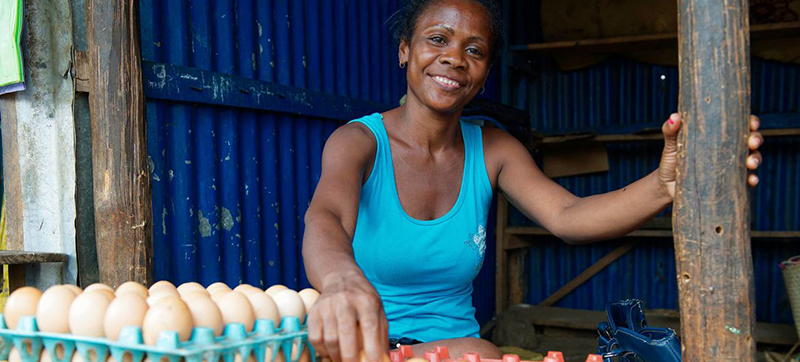
New York: Essential workers who kept families, societies and economies going while the world was on COVID lockdown, need better pay and conditions urgently, if countries are to future-proof themselves from the next global crisis, UN labour experts said on Wednesday.
“In a number of countries, key sectors are facing labour shortages, because people are increasingly reluctant to engage in work which is not properly, adequately, fairly valued by society and rewarded in terms of better pay and improved working conditions,” said Manuela Tomei, Assistant Director-General for Governance, Rights and Dialogue at the International Labour Organization (ILO).
According to a new report from ILO drawing on data from 90 countries, key workers remain severely “undervalued” and their contributions insufficiently recognized.
Underpaid, underprotected
The study focuses on essential workers in sectors such as health, retail, food systems, security, sanitation and transport. ILO’s findings show that during the COVID-19 crisis these key workers suffered higher mortality rates than non-key workers, because of greater exposure to the virus.
They also continue to be over-represented among low pay workers, defined as those who earn less than two-thirds of the median wage.
Investing in the future
Speaking in Geneva on Wednesday, Richard Samans, Director of ILO’s research department, insisted that investing in better pay and working conditions for key workers was a matter of fairness and future-proofing in the event of another global emergency.
“This is an opportunity for obtaining a two-for-one payoff: both improving the working conditions, reducing the social justice deficits faced by many of these categories of workers, but also for strengthening the resilience of economies, their ability to withstand shocks of whatever nature, whether it be a future pandemic, a natural disaster, or other.”
Key recommendations in the report include strengthening regulation in essential areas such as wages and workplace safety, as well as targeting investments in the health and food sectors and in support of small businesses
Risk of labour shortages
ILO’s report shows a gap in earnings between key and non-key workers of 26 per cent on average. Working conditions in essential jobs are also characterized by long and unpredictable hours, limited training opportunities and poor social protection coverage, including lesser access to paid sick leave.
Nearly one-in-three key workers worldwide is on a temporary contract, with a negative impact on job security and entitlements.
ILO underscores that when poor working conditions of key workers exacerbate employee turnover and labour shortages, the provision of basic services is in jeopardy. This is true both in higher and lower-income countries.
Learning lessons from COVID
Faced with the need to boost investment in order to guarantee decent work and strengthen business continuity “in good times or bad”, the UN agency urged governments, employers and workers’ organizations to work together to ensure the delivery of key goods and services. “Like an insurance policy, such a strategy would more than pay for itself when the next crisis hits,” ILO said.
Support Our Journalism
We cannot do without you.. your contribution supports unbiased journalism
IBNS is not driven by any ism- not wokeism, not racism, not skewed secularism, not hyper right-wing or left liberal ideals, nor by any hardline religious beliefs or hyper nationalism. We want to serve you good old objective news, as they are. We do not judge or preach. We let people decide for themselves. We only try to present factual and well-sourced news.
Support objective journalism for a small contribution.