


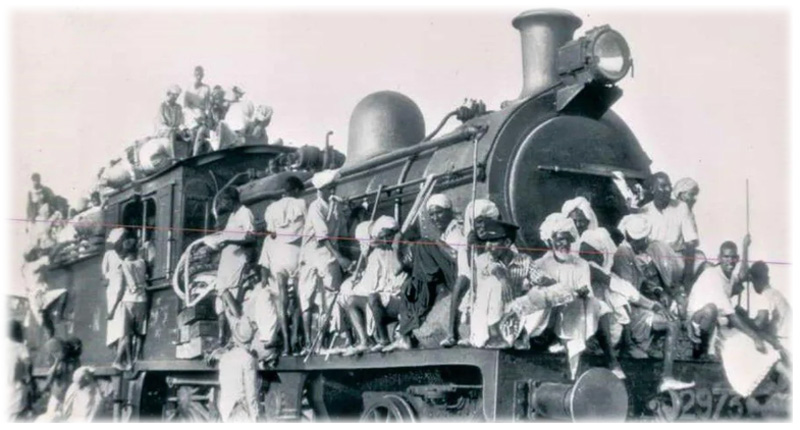
 Sikhs
Sikhs
Unseen atrocities against Sikhs during the 1947 partition
In the tumultuous landscape of 1947, as the Indian subcontinent was cleaved into two separate nations, the Sikhs found themselves at the epicenter of a storm of political unrest and communal violence.
The events unfolding during the partition were marked by a series of brutalities that have left an indelible scar on the collective memory of the Sikh community.
Amidst the political upheaval, Sikhs were grappling with the ramifications of the demand for Pakistan and the escalating Muslim League agitation. The rift between the Sikhs and the League deepened, pushing the former towards contemplating the creation of a separate Sikh-Hindu state in the Punjab districts where Muslims were in the minority.
Public protests erupted as Sikh leaders vehemently opposed the pro-Pakistan and provocative slogans propagated by the Muslim League. Phrases like ‘Khun se lenge Pakistan’ (We will take Pakistan through blood), ‘Dena hoga Pakistan’ (We will take Pakistan), and ‘Leke rahenge Pakistan’ (We will keep Pakistan) added fuel to the fire of communal tensions. The atmosphere became increasingly charged, reaching a boiling point on key dates like 15th and 21st February 1947.
During these tense times, the Muslim League adopted a bullying, menacing, and hooliganistic character, fueled by what seemed like a mild and almost indulgent attitude towards its activities. Incidents of train hold-ups in Amritsar, Ludhiana, Gujranwala, and other places underscored the growing lawlessness. Shockingly, the police response was often insufficient, failing to adequately address the mounting crisis.
A turning point occurred on the 14th of February, when non-Muslim tonga drivers had their faces blackened in an act of humiliation. The murder of a Sikh police constable in Amritsar revealed a chilling reality. The Muslim mob besieged the helpless constable, stoning him to death in a brutal manner. Disturbingly, Muslim members of the police party, including only a few non-Muslims, did nothing to rescue their Sikh colleague. This incident laid bare the harsh truth that Sikhs were being targeted solely based on their identity.
This discriminatory violence escalated, prompting urgent pleas from Sikh sources. On February 26, 1946, the Assembly Panthic Party, with Master Tara Singh in attendance, appealed to the Muslim League to halt their “unlawful activities” and warned of serious repercussions. Simultaneously, Master Tara Singh emphasized the need for the Punjab Government to adopt a firm stance and swiftly address the growing menace to the province’s peace.
(Photo and text courtesy: Khalsavox.com)
Support Our Journalism
We cannot do without you.. your contribution supports unbiased journalism
IBNS is not driven by any ism- not wokeism, not racism, not skewed secularism, not hyper right-wing or left liberal ideals, nor by any hardline religious beliefs or hyper nationalism. We want to serve you good old objective news, as they are. We do not judge or preach. We let people decide for themselves. We only try to present factual and well-sourced news.
Support objective journalism for a small contribution.


