UNICEF urges more funding in Ukraine for children affected by conflict
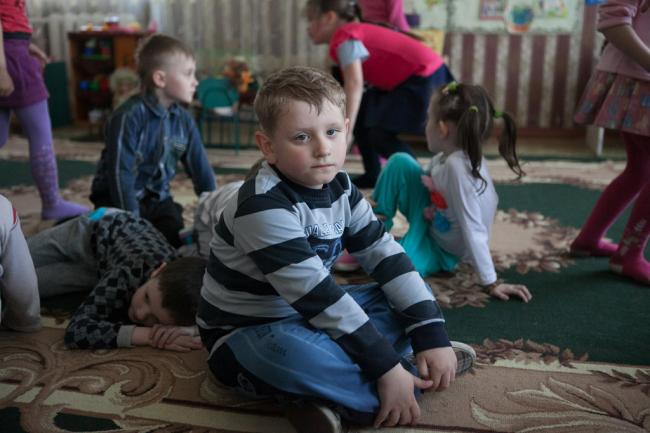
Speaking to reporters at a press briefing in Geneva, UNICEF spokesperson Christophe Boulierac voiced concern about the numbers of child casualties caused by the hostilities, noting that since the outbreak of fighting in March 2014, more than 240 children had been victims of the conflict, including 68 children killed and 180 injured.
Heavy weapons, landmines and explosives in Marinka, in the western area of Donetsk, were particularly dangerous for children, Boulierac said, pointing to a recent UNICEF report which found that landmines in Donetsk had killed 42 children and injured 109.
In recent weeks, Marinka has witnessed a significant bout of fighting which has led to a critical deterioration in humanitarian needs and a lack of access to water.
The children in those areas, the UNICEF spokesperson continued, were paying the highest price as they had been consumed by high levels of stress and had witnessed violent fighting.
He added that UNICEF was providing psychological support to more than 20,000 boys and girls since the beginning of 2015 while also funnelling safe drinking water to over 500,000 people across Donetsk and Lugansk.
At the same time, UNICEF had also launched a landmine education campaign which provided life-saving information about the risks of unexploded ordinance and similar weaponry.
In late February 2014, the situation in Ukraine transcended what was initially seen as an internal Ukrainian political crisis into violent clashes in parts of the country, later reaching full-scale conflict in the east. Nevertheless, despite a September 2014 cease-fire agreed in Minsk, the fighting has since continuously deteriorated, with serious consequences for the country's unity, territorial integrity and stability.
In February 2015, the parties in Ukraine and the Trilateral Contact Group signed a “Package of Measures for the Implementation of the Minsk Agreements.”
Boulierac explained that UNICEF remained very worried that the continuing conflict would lead to a deteriorating humanitarian crisis and an increase in the number of child casualties, adding that the agency was appealing for $55.8 million to meet the urgent humanitarian needs of children and families in Ukraine.
Photo: UNICEF/Aleksey Filippov
Support Our Journalism
We cannot do without you.. your contribution supports unbiased journalism
IBNS is not driven by any ism- not wokeism, not racism, not skewed secularism, not hyper right-wing or left liberal ideals, nor by any hardline religious beliefs or hyper nationalism. We want to serve you good old objective news, as they are. We do not judge or preach. We let people decide for themselves. We only try to present factual and well-sourced news.
Support objective journalism for a small contribution.