


 UNHCR
UNHCR
UNHCR chief calls for mechanism to deal with ‘unprecedented’ displacement in Mexico and Central America
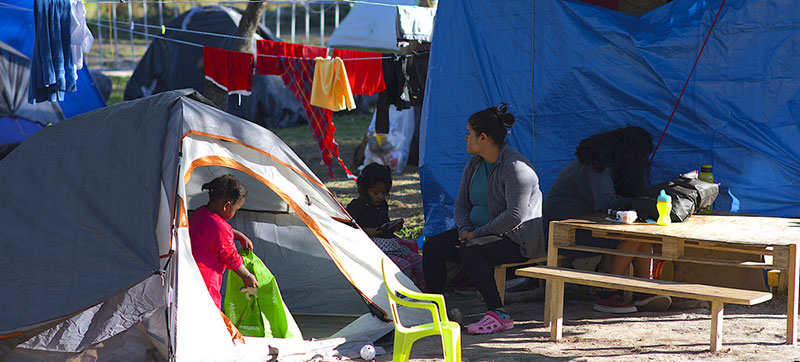
New York: Lack of opportunities, gangs, organized crime, the ravages of the pandemic and climate change, have triggered the displacement of nearly one million people in Mexico and Central America in recent years.
To deal with the problem more effectively, the UN High Commissioner for Refugees called on Thursday for a new mechanism that could operate across the whole region, to deal with what is now an unprecedented displacement crisis.
At the end of a 10-day fact-finding to Mexico, El Salvador and Guatemala, Filippo Grandi, UN refugee agency chief (UNHCR), said the new system and accord between countries, was needed to scale up, coordinate and create synergies.
“Instead of erecting walls to contain people, we need to stabilize those on the move by creating the necessary conditions so that they don't need to leave, and those who need to leave, find what they need closer to home,” argued Mr. Grandi.
New trends
Migrants and asylum seekers from further south and from the Caribbean are increasingly travelling through Central America.
For example, this year alone, more than 100,000 men, women and children have crossed from Colombia to Panama through the dense jungle of the Darien Gap.
The High Commissioner noted, however, that “Mexico and Guatemala are not only countries of transit but increasingly places where refugees and migrants are finding safety and access to opportunities.”
During the first six months of the year, Mexico received the third highest number of asylum applications in the world.
In Mexico and Guatemala, Grandi recalled seeing “examples of generosity, a warm welcome and genuine efforts to make refugees part of the fabric of society and the economy.”
“I also met many refugees who are happily working, studying and contributing in many different ways to their host communities”, he said.
Internal displacement
Many of the people uprooted by violence in the region do not cross international borders but remain within their own countries.
During his visit, the High Commissioner witnessed the efforts of El Salvador to strengthen its legislation, public policies and programmes to respond to the needs of internally displaced people.
“In El Salvador, I was impressed by the enthusiasm of young people expressing themselves and demonstrating their talents. Their resilience and strength are inspiring”, he said.
Examples
Grandi also visited urban youth centres run by the Government and community-based initiatives that offer safe spaces to children and adolescents at risk of displacement and recruitment by criminal gangs.
On Tuesday, he participated in the 4th Annual meeting of the Comprehensive Regional Protection and Solutions Framework (MIRPS, its Spanish acronym), which brings together Belize, Costa Rica, El Salvador, Guatemala, Honduras, Mexico and Panama.
Pointing to examples, the High Commissioner noted that “there are many excellent initiatives and local projects in the region.”
“They are very important and necessary because they show what can be achieved, but by themselves they are not enough. To make a difference we need to replicate them, expand their reach and interconnect them”, he argued.
During his visit, Grandi met the Presidents of El Salvador and Guatemala, national and local government officials, and representatives from NGOs, community organizations, academic institutions, the private sector and other partners.
He also met refugees, asylum seekers, internally displaced people and migrants, to hear their stories of hardship and survival.
Support Our Journalism
We cannot do without you.. your contribution supports unbiased journalism
IBNS is not driven by any ism- not wokeism, not racism, not skewed secularism, not hyper right-wing or left liberal ideals, nor by any hardline religious beliefs or hyper nationalism. We want to serve you good old objective news, as they are. We do not judge or preach. We let people decide for themselves. We only try to present factual and well-sourced news.
Support objective journalism for a small contribution.


