October 03, 2026 10:31 pm (IST)

Follow us:


UN urges respect for rights of persons with disabilities
New York, Apr 23 (IBNS): People with disabilities have the same rights as everyone to make decisions about their lives, including the right to take risks and make mistakes, a United Nations committee has stressed in new guidelines.
“Respect for the freedom to make choices should be accorded to all persons with disabilities, no matter how much support they need,” said Theresia Degener from the Committee on the Rights of Persons with Disabilities (CRPD).
“People with disabilities, including those with psychosocial or cognitive impairments, must be supported in making decisions, and not have decisions made for them, even when it is thought to be in their ‘best interests’,” she stated in a news release.
The Committee noted that while Article 12 of the Convention on the Rights of Persons with Disabilities enshrines equal recognition before the law, many such persons are denied legal capacity, often on the basis of mental capacity assessments, and are deprived of fundamental rights such as the right to vote and the right to marry and found a family.
There is a general misunderstanding of States’ obligations under the Convention and a failure to recognize the importance of “supported decision-making,” said the Committee. Instead, “substituted decision-making,” where others make choices on the person’s behalf, remains common – for example under guardianship regimes or through the use of mental health laws that permit forced treatment.
The Committee has issued a detailed reading of Article 12 to clarify States’ obligations, in which it underscores the position that States are obliged to provide persons with disabilities with the broad range of support they may need to make decisions that have legal effect.
“Support in the exercise of legal capacity must respect the rights, will and preferences of persons with disabilities,” stated the 18-member body, which monitors States’ implementation of the Convention.
The panel recognizes that it is not always possible to determine exactly what an individual wants, but in these cases decisions should be made on the “best interpretation of their will and preference,” rather than basing choices on what they regard as the “best interests” of the person.
The Committee also noted that “supported decision-making” is closely tied to accessibility of services, information and communication, set out under Article 9 of the Convention.
In this regard, the Committee details the importance of accessibility in allowing persons with disabilities to enjoy and realise their human rights and fundamental freedoms on an equal basis with others.
Persons with disabilities face many barriers, and so “it is important that accessibility is addressed in all its complexity, encompassing the physical environment, transportation, information and communication, and services,” it noted.
Goods, products and services provided to the public, the Committee stressed, must be accessible to all, regardless of whether they are owned and/or provided by a public authority or by a private enterprise.
All new goods, products, facilities, infrastructure, technology and services should be designed to be fully accessible by persons with disabilities. States should also set definite timeframes for and allocate adequate resources towards removing existing barriers. Austerity measures are no excuse for failing to ensure gradual accessibility for persons with disabilities, the Committee added.
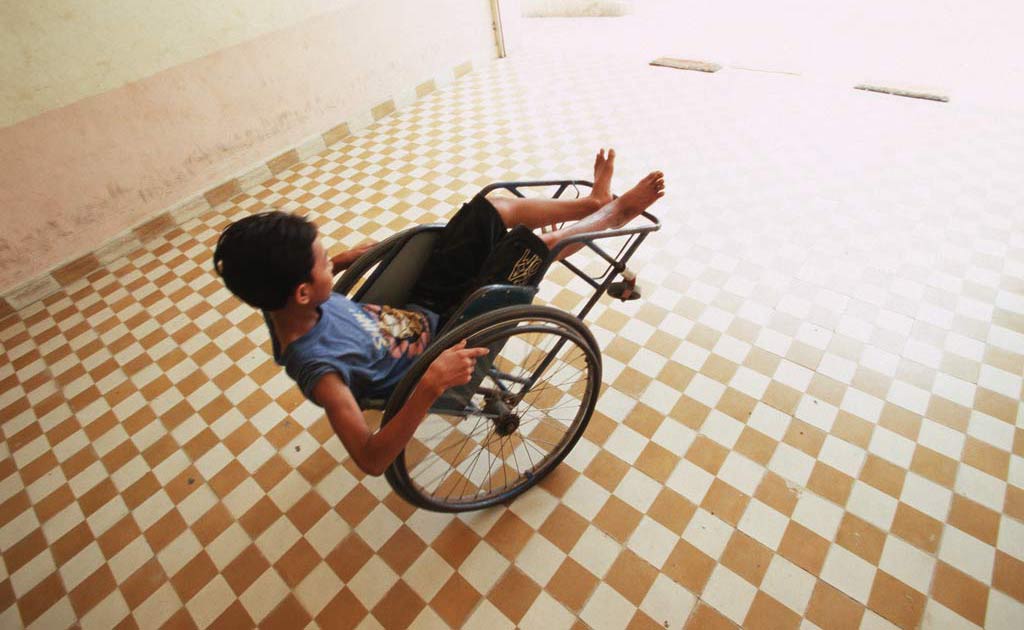
(Photo: World Bank/Masaru Goto)
Support Our Journalism
We cannot do without you.. your contribution supports unbiased journalism
IBNS is not driven by any ism- not wokeism, not racism, not skewed secularism, not hyper right-wing or left liberal ideals, nor by any hardline religious beliefs or hyper nationalism. We want to serve you good old objective news, as they are. We do not judge or preach. We let people decide for themselves. We only try to present factual and well-sourced news.
Support objective journalism for a small contribution.



Latest Headlines
UAE calls Flydubai cockpit attack a ‘terrorist act’; Omani pilot tried to take control
Sat, Oct 03 2026
flydubai cockpit attack: Deleted posts expose Omani co-pilot’s views on women, alleged extremist past
Sat, Oct 03 2026
flydubai cockpit horror: Omani co-pilot Hamam al-Hammami attacked Captain Smit Machchhar with crash axe, tried to seize control
Sat, Oct 03 2026
flydubai temporarily suspends all Israel flights after co-pilot’s alleged cockpit attack, crash attempt
Sat, Oct 03 2026
Grounded in Oman over ‘radical views’, then hired by flydubai: What we know about Omani pilot Hamam al-Hammami
Sat, Oct 03 2026
Flydubai co-pilot who stabbed Smit Machchhar identified, was banned from flying by Oman due to suspected extremism: Report
Sat, Oct 03 2026
UK-Iranian national arrested over RAF Fairford terror plot probe
Fri, Oct 02 2026