October 03, 2026 10:30 pm (IST)

Follow us:


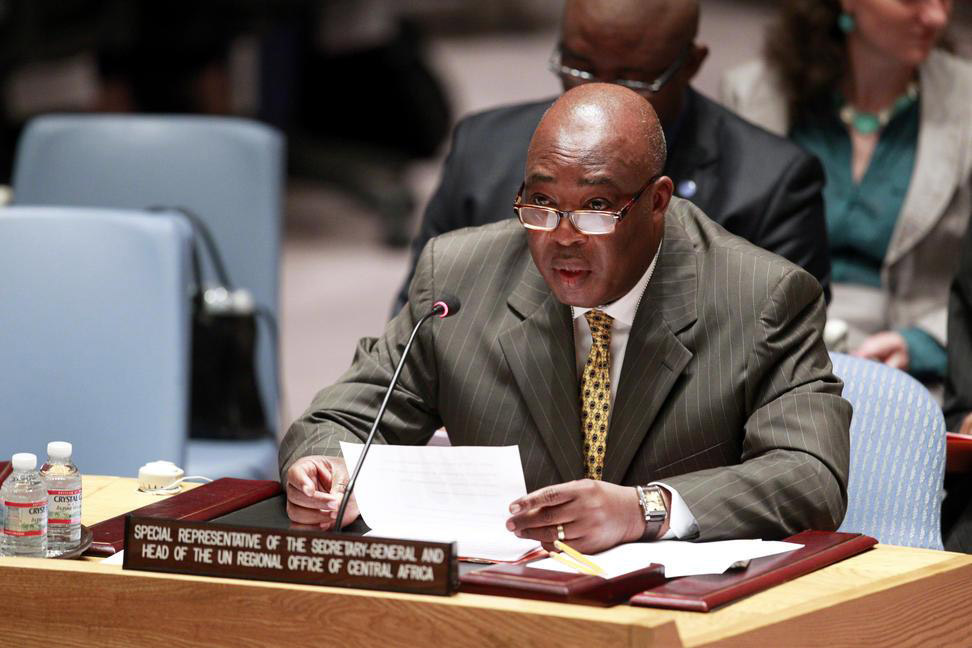
UN urges continued international support for Central Africa
New York, May 13 (IBNS): Significant gains have been made in recent years in combating the threat of the rebel Lord's Resistance Army (LRA) but the countries of Central Africa still face numerous challenges that require continued international support, a senior United Nations official told the Security Council on Monday.
“Despite the efforts made by leaders of Central African countries and their people, the sub-region remains fragile and continues to require ongoing support from the international community, particularly the United Nations,” said Abou Moussa, the Secretary-General’s Special Representative and head of the UN Regional Office for Central Africa (UNOCA).
In his final briefing to the Council, Moussa highlighted UN initiatives to promote stability in the sub-region, including addressing the threat and impact of the LRA, a violent armed group that has been undermining stability in the region, as well as tackle critical security challenges such as piracy and armed robbery in the Gulf of Guinea.
He reported that the number of LRA-related deaths, abductions and displaced persons have continued to decline, while military operations and the defections campaign have further weakened the LRA.
“Significant gains have been made over the past three years. Overall, we have overseen a period of forward momentum, which must be maintained well into the post-[Joseph] Kony phase,” he said, referring to the group’s leader.
Moussa also reported on other aspects of the Secretary-General’s recent report on UNOCA’s activities, including his missions to Chad, Cameroon, Republic of Congo and the Democratic Republic of the Congo, which highlighted the regional consequences of the crisis in the Central African Republic (CAR), including humanitarian challenges faced by the governments and UN agencies.
“These States also expressed concern that flows of weapons, activities of armed groups and sectarian violence may spread across CAR’s borders and threaten their own stability.”
Moussa also voiced concern about the impact of fighting between the Nigerian army and the militant group known as Boko Haram, which has now resulted in the displacement of tens of thousands of Nigerian refugees and returning immigrants to northern Cameroon and Chad.
He added that with the Council’s continuing support and guidance, UNOCA will continue to play an instrumental role in supporting the States of the sub-region in confronting pressing challenges.
Moussa will be succeeded by Abdoulaye Bathily of Senegal who served most recently as the Secretary-General’s Deputy Special Representative in Mali.
In a presidential statement, the Council expressed its concern at the deterioration in the security situation in parts of Central Africa, in particular the crisis in CAR and its growing regional impact, and the threat of terrorism, including the expansion of Boko Haram terrorist activities into countries in the sub-region.
The Council also expressed its continuing concern regarding maritime insecurity in the Gulf of Guinea, the illegal wildlife trade and transnational organized crime.
[Special Representative and head of the UN Regional Office for Central Africa (UNOCA) Abou Moussa, makes his final briefing to the Security Council. UN Photo/Paulo Filgueiras]
Support Our Journalism
We cannot do without you.. your contribution supports unbiased journalism
IBNS is not driven by any ism- not wokeism, not racism, not skewed secularism, not hyper right-wing or left liberal ideals, nor by any hardline religious beliefs or hyper nationalism. We want to serve you good old objective news, as they are. We do not judge or preach. We let people decide for themselves. We only try to present factual and well-sourced news.
Support objective journalism for a small contribution.



Latest Headlines
UAE calls Flydubai cockpit attack a ‘terrorist act’; Omani pilot tried to take control
Sat, Oct 03 2026
flydubai cockpit attack: Deleted posts expose Omani co-pilot’s views on women, alleged extremist past
Sat, Oct 03 2026
flydubai cockpit horror: Omani co-pilot Hamam al-Hammami attacked Captain Smit Machchhar with crash axe, tried to seize control
Sat, Oct 03 2026
flydubai temporarily suspends all Israel flights after co-pilot’s alleged cockpit attack, crash attempt
Sat, Oct 03 2026
Grounded in Oman over ‘radical views’, then hired by flydubai: What we know about Omani pilot Hamam al-Hammami
Sat, Oct 03 2026
Flydubai co-pilot who stabbed Smit Machchhar identified, was banned from flying by Oman due to suspected extremism: Report
Sat, Oct 03 2026
UK-Iranian national arrested over RAF Fairford terror plot probe
Fri, Oct 02 2026