


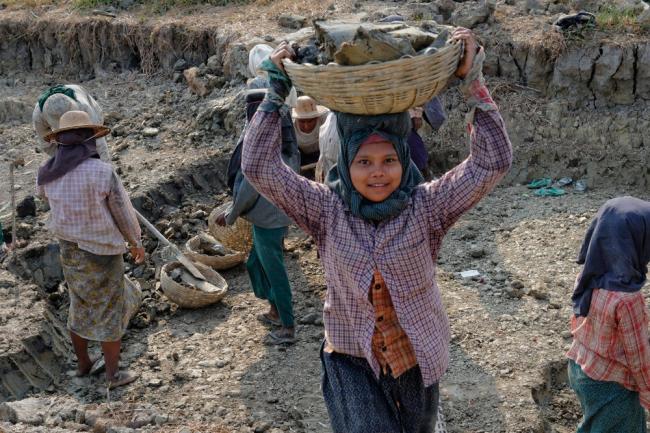
UN protocol on ending modern slavery edges closer to entry into force
“Norway’s ratification will help millions of children, women and men reclaim their freedom and dignity. It represents a strong call to other member States to renew their commitment to protect forced labourers, where ever they may be,” said ILO Director-General Guy Ryder in a news release.
Following the Norwegian Government’s action, the new framework will come into force on 9 November 2016, the news release said.
According to ILO, the Forced Labour Convention was supplemented when government, employer and worker delegates at the International Labour Conference (ILC) voted overwhelmingly to adopt a Protocol and Recommendation in 2014.
Further, the Organization said that the new Protocol added new measures to the existingForced Labour Convention (1930), such as provisions on prevention, protection and access to justice, as well as requiring public and private employers to exercise “due diligence” to avoid modern slavery in their business practices and supply chains.
“It is important for all countries to recognize the issue of modern slavery and that it must be a top priority on their agendas to eradicate it once and for all,” said Norway’s Ambassador to the United Nations and other international organizations Steffen Kongstad.
Approximately 21 million people are victims of forced labour around the world, generating approximately $150 billion a year in illicit profits, according to ILO evaluations.
ILO explained that the victims are exploited in agriculture, fishing, domestic work, construction, manufacturing, mining and other economic activities and women and girls, in particular, are subjected to commercial sexual exploitation.
According ILO research, forced labour is not an issue only in developing countries as profits from the forced labour industry are higher in developed economies and the European Union than they are anywhere else in the world.
ILO recently launched a new global campaign in partnership with the International Organization of Employers (IOE) and the International Trade Union Confederation (ITUC), to promote ratification of the Protocol in an effort to end modern slavery.
The campaign 50 for Freedom aims to mobilize public support and influence in at least 50 countries to ratify the Forced Labour Protocol by 2018.
Photo: ILO/Marcel Crozet/www.justearthnews.com
Support Our Journalism
We cannot do without you.. your contribution supports unbiased journalism
IBNS is not driven by any ism- not wokeism, not racism, not skewed secularism, not hyper right-wing or left liberal ideals, nor by any hardline religious beliefs or hyper nationalism. We want to serve you good old objective news, as they are. We do not judge or preach. We let people decide for themselves. We only try to present factual and well-sourced news.
Support objective journalism for a small contribution.


