UN guidelines seek to make genetic diversity part of climate change adaptation
“Genetic resources for food and agriculture will have to contribute greatly to our efforts to cope with climate change,” said Maria Helena Semedo, FAO Deputy Director-General for Natural Resources, adding that: “We need to act now to reduce the risk that the scale and speed of climate change will surpass our ability to … use these resources in the field.”
Encompassing the diversity of plants, animals and other life forms, genetic resources play a critical role in achieving food security and nutrition objectives as well as addressing climate change, which themselves are confronting.
Crops, for example, with certain staples providing 60 per cent of all human dietary energy, may by 25 per cent lower in 2050 than today.
Aiming to assist countries in conserving genetic resources as a pivotal reservoir, theguidelines also advise on agriculture adaptation and building resilience into food production systems, said Semedo.
With no commonly adopted approach available on integrating agricultural biodiversity into strategic planning for climate change adaptation, the guidelines further fill this gap by helping countries develop their National Adaptation Plans (NAPs) in genetic resources dimensions.
Such efforts, among others, include maintaining on-site farms diversity and building regional and global gene banks.
“We need to secure and mobilize genetic resources now to have options for the future … and we need to plan,” said Irene Hoffmann, Secretary of FAO’s Intergovernmental Commission on Genetic Resources for Food and Agriculture, who supervised the guidelines’ development.
International cooperation and exchange, she stressed, is of great importance as all countries are inter-dependent on genetic diversity.
However, funding is required to support countries in this process, Ms. Hoffmann stressed.
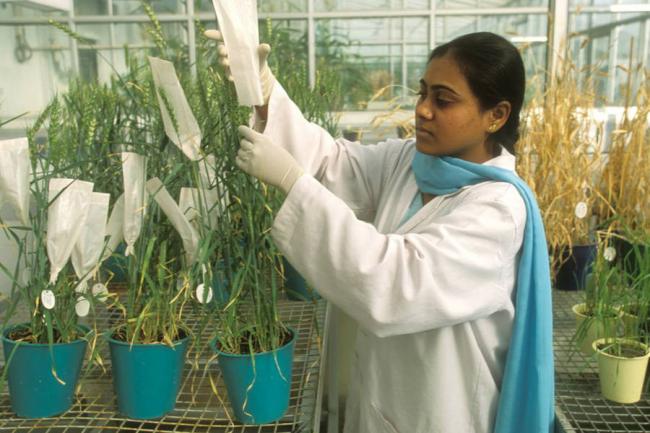
Genetic resources for food and agriculture contain a variety of plants, animals, forests, aquatic resources, micro-organisms and invertebrates that play a role in food and agricultural production.
Photo: FAO/Jon Spaull/www.justearthnews.com
Support Our Journalism
We cannot do without you.. your contribution supports unbiased journalism
IBNS is not driven by any ism- not wokeism, not racism, not skewed secularism, not hyper right-wing or left liberal ideals, nor by any hardline religious beliefs or hyper nationalism. We want to serve you good old objective news, as they are. We do not judge or preach. We let people decide for themselves. We only try to present factual and well-sourced news.
Support objective journalism for a small contribution.