UN expert warns African governments against privatizing basic education
“Education is not a privilege of the rich and well-to-do; it is an inalienable right of every child. Provision of basic education free of costs is a core obligation of States,” Kishore Singh saidafter education authorities considered, among other issues, possibly cutting costs by promoting the expansion of private education.
African education authorities discussed the possibility of reducing States’ education spending during the Sub-Saharan Africa Regional Ministerial Conference on Education Post-2015 African in Kigali, Rwanda.
Singh voiced his deep concern that some governments were actively encouraging private basic education, emphasizing, “Now more than ever, governments should be expanding public educational opportunities for the marginalized groups, especially children from poor families.”
He recalled his 2014 report to the UN General Assembly, which emphasizes the importance of preserving education as a public good and not a profit-making business and underscores the principles of non-discrimination, equal opportunity, social justice and equity.
“Privatization in education negatively affects the right to education both as entitlement and as empowerment. Moreover, it depletes public investment in education as an essential public service and can lead to abusive practices,” the Special Rapporteur stressed.
He noted that, in the context of the UN post-2015 development agenda, “education deserves to be a high priority, receiving a high degree of public investment in recognition of the fact that it benefits both the individual and society.”
Singh called on governments “to stand against the idea of privatising basic education and to strengthen their public systeFree basic education is the cornerstone of the right to education and must not be undermined through privatization.”
Independent experts or special rapporteurs are appointed by the Geneva-based Human Rights Council to examine and report back on a country situation or a specific human rights theme. The positions are honorary and the experts are not UN staff, nor are they paid for their work.
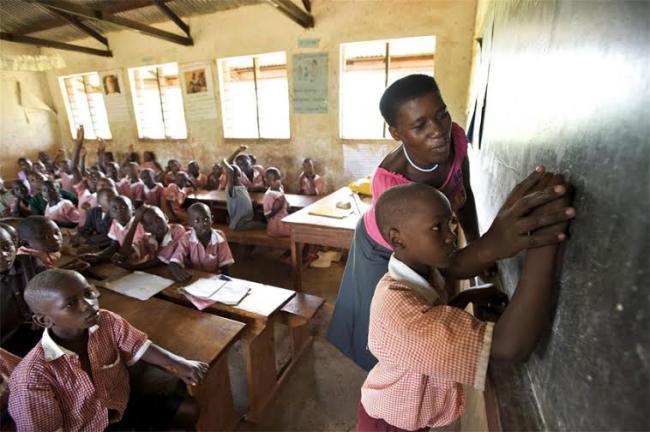
Photo: UNICEF/NYHQ2010-1482/Shehzad Noorani
Support Our Journalism
We cannot do without you.. your contribution supports unbiased journalism
IBNS is not driven by any ism- not wokeism, not racism, not skewed secularism, not hyper right-wing or left liberal ideals, nor by any hardline religious beliefs or hyper nationalism. We want to serve you good old objective news, as they are. We do not judge or preach. We let people decide for themselves. We only try to present factual and well-sourced news.
Support objective journalism for a small contribution.