October 03, 2026 08:39 pm (IST)

Follow us:


UN concerned over thousands of IDPs in Philippines
New York, Apr 5 (IBNS): The United Nations on Friday sounded the alarm on behalf of some 64,600 internally displaced persons (IDPs) in southern Philippines still living in evacuation centres, transition sites and with host communities, six months after deadly fighting broke out between the rebel Moro National Liberation Front and Government forces in Zamboanga City.
“There is an urgent need to find shelter solutions for these IDPs,” said Jens Laerke, spokesperson for the Office for the Coordination for Humanitarian Affairs (OCHA), at a press briefing in Geneva, recalling that in September 2013, over 100,000 people were displaced by the fighting.
At that time, OCHA estimated that, in addition to the tens of thousands displaced, some 132 people died as a result of the standoff between the Government forces and non-State actors. More than 10,000 homes were destroyed in and around Zamboanga City and, additionally, nearly 19,000 were displaced in Basilan province. In the immediate aftermath of the fighting, OCHA announced that the UN emergency relief fund (CERF) would allocate USD 3 million to assist the population.
Citing current figures from the Philippines Department of Social Welfare and Development, Laerke said that the remaining IDPs currently lack access to adequate and safe water and sanitation and there are serious health concerns – acute respiratory infections, diarrhoea and skin diseases – due to overcrowding in the two largest evacuation centres hosting some 20,000 IDPs, including the Joaquin Enriquez Sports Complex in Zamboanga.
“There is, for example, a need for 940 extra latrines to meet global standards. There is also a water shortage because of rationing imposed last month as reservoirs were low in the dry season,” he said.
Further, general food distribution to the affected region ended in December 2013. However nearly 12,000 IDPs and returnees continued to benefit from food-for-work programmes, and some 11,000 children had received emergency food in their schools.
“Local authorities have begun implementing their recovery and rehabilitation plan looking at longer-term livelihoods programmes,” he said, adding that city officials have requested support from humanitarian agencies to assist the families still in evacuation centres and transition sites.
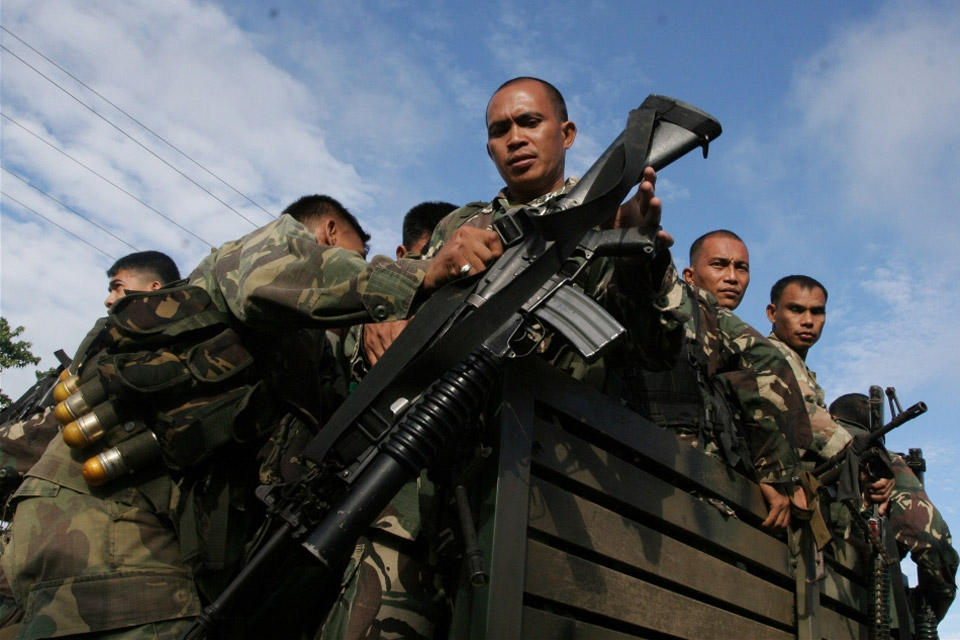
(Army troops en route to a combat patrol in Maguindanao Province, southern Philippines. Thousands of people have been displaced by the ongoing conflict in Mindanao. Photo: IRIN/Jason Gutierrez)
Support Our Journalism
We cannot do without you.. your contribution supports unbiased journalism
IBNS is not driven by any ism- not wokeism, not racism, not skewed secularism, not hyper right-wing or left liberal ideals, nor by any hardline religious beliefs or hyper nationalism. We want to serve you good old objective news, as they are. We do not judge or preach. We let people decide for themselves. We only try to present factual and well-sourced news.
Support objective journalism for a small contribution.



Latest Headlines
UAE calls Flydubai cockpit attack a ‘terrorist act’; Omani pilot tried to take control
Sat, Oct 03 2026
flydubai cockpit attack: Deleted posts expose Omani co-pilot’s views on women, alleged extremist past
Sat, Oct 03 2026
flydubai cockpit horror: Omani co-pilot Hamam al-Hammami attacked Captain Smit Machchhar with crash axe, tried to seize control
Sat, Oct 03 2026
flydubai temporarily suspends all Israel flights after co-pilot’s alleged cockpit attack, crash attempt
Sat, Oct 03 2026
Grounded in Oman over ‘radical views’, then hired by flydubai: What we know about Omani pilot Hamam al-Hammami
Sat, Oct 03 2026
Flydubai co-pilot who stabbed Smit Machchhar identified, was banned from flying by Oman due to suspected extremism: Report
Sat, Oct 03 2026
UK-Iranian national arrested over RAF Fairford terror plot probe
Fri, Oct 02 2026