


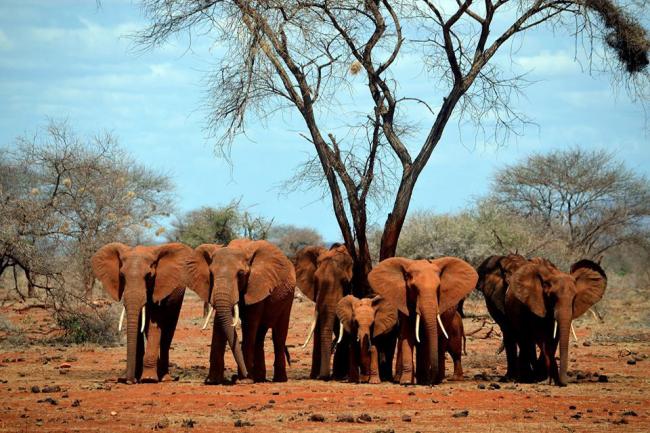
UN-backed report finds high levels of elephant poaching across Africa
“African elephant populations continue to face an immediate threat to their survival from high-levels of poaching for their ivory, especially in Central and West Africa where the situation appears to have deteriorated,” said John E. Scanlon, Secretary-General of the Convention on International Trade in Endangered Species of Wild Fauna and Flora (CITES).
The latest figures released by CITES’ programme for monitoring the illegal killing of elephants, otherwise known as MIKE, show no increase in the overall poaching trends in 2014 with levels dropping and then levelling off since the peak in 2011.
However, with overall killing rates exceeding natural birth rates, “poaching trends remain far too high and at a level that cannot be sustained,” said a CITES press release.
In its report, CITES identifies 22 countries that are most heavily implicated in the illegal trade in ivory, with areas such as Bangassou, in the Central African Republic; Garamba, in the Democratic Republic of the Congo; Niassa, in Mozambique; Pendjari, in Benin; and Selous-Mikumi, in Tanzania, remaining of “particular concern.”
“These poaching trends highlight the need to redouble efforts to mitigate the problem by addressing demand for illegal ivory, strengthening management and ensuring sustainable livelihoods for people who live with elephants,” said Julian Blanc, head of the MIKE programme.
Scanlon nonetheless admitted that despite the downbeat assessment, there were also some “encouraging signals” in parts of East Africa, where overall poaching trends appeared to have declined, indicating “what is possible through a sustained and collective effort.”
“The momentum generated over the past few years is translating into deeper and stronger efforts to fight these crimes on the front line, where it is needed most – from the field, to police and customs, to illicit markets,” he continued.
He added, “And this enhanced front line effort gives us confidence that if we persist with, and deepen this collective effort, we will reverse the devastating poaching trends of the past decade.”
Photo: CITES
Support Our Journalism
We cannot do without you.. your contribution supports unbiased journalism
IBNS is not driven by any ism- not wokeism, not racism, not skewed secularism, not hyper right-wing or left liberal ideals, nor by any hardline religious beliefs or hyper nationalism. We want to serve you good old objective news, as they are. We do not judge or preach. We let people decide for themselves. We only try to present factual and well-sourced news.
Support objective journalism for a small contribution.


