UN-backed narcotics control body calls for more policies to address drug dependence among women
The International Narcotics Control Board (INCB) said that women and girls comprise one-third of global drug users yet are only one-fifth of those receiving treatment, as significant systemic, structural, social, cultural and personal barriers affect women’s ability to access substance abuse treatment..
Further, they are also more likely to be prescribed narcotics and anti-anxiety medication than men, and are thus more likely to abuse these medications.
For example, Germany and Serbia have reported that fatal overdoses from prescription drugs are more frequent among women. Additionally, countries such as the United Kingdom of Great Britain and Northern Ireland have seen larger increases in overdoses, of all substances, among women than among men.
These are among the key findings in the 2016 Annual Report launched on Thursday by the INCB. It stresses that Governments should prioritize providing health care for drug-dependent women, in addition to more funding and coordination to prevent and treat drug abuse among women.
“We want to change perceptions and remind people, particularly policymakers, of the importance of protecting the rights of women who use drugs or who have committed drug-related offences and the rights of their families,” said the organization’s President, Werner Sipp, in a news release.
The report also highlights the importance of targeting prevention programmes to specific populations, such as prisoners, pregnant women, people living with HIV/AIDS, and sex workers.
It notes that women prisoners and sex workers are at “particular risk” of drug use.
Countries are also encouraged to seek alternatives to imprisonment for drug-related offences, such as treatment, rehabilitation and social integration.
The INCB also repeated its longstanding call for countries to abolish the death penalty for drug-related offences.
Among its other observations, the Board noted with “great concern” recent reports in some countries of the targeting of individuals suspected of involvement in drug-related activity, including drug use, who have been subjected to violent acts of reprisal and murder at the hands of law enforcement personnel and members of the civilian population.
In some instances, those acts have been committed with the expressed or tacit approval, or even encouragement, of political forces and, in many cases, have gone unpunished, said the Board, emphasizing that it condemned such practices, including the extrajudicial targeting of persons suspected of drug use, “in the strongest possible terms,” and denounced them as a “serious violation of human rights […] and an affront to the most basic standards of human dignity.”
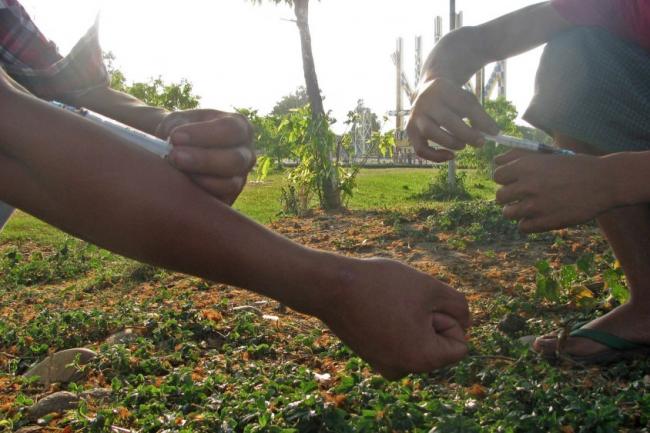
Photo: IRIN
Source: www.justearthnews.com
Support Our Journalism
We cannot do without you.. your contribution supports unbiased journalism
IBNS is not driven by any ism- not wokeism, not racism, not skewed secularism, not hyper right-wing or left liberal ideals, nor by any hardline religious beliefs or hyper nationalism. We want to serve you good old objective news, as they are. We do not judge or preach. We let people decide for themselves. We only try to present factual and well-sourced news.
Support objective journalism for a small contribution.