UN atomic energy chief encourages States to improve global emergency response
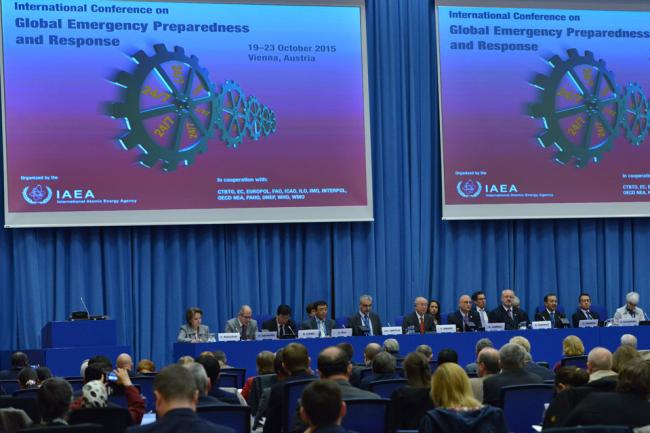
“We provide guidance to Member States that covers all areas of emergency preparedness and response. This includes support in understanding and mastering the latest IAEA concepts, principles and safety standards.” IAEA Director General Yukio Amano said on Monday in opening remarks opening remarks to the IAEA International Conference on Global Emergency Preparedness and Response.
“We assist in the design, conduct and evaluation of emergency exercises. We provide technical support to national and regional capacity-building projects,” he added.
In addition, the IAEA plays the central role in responding and establishing response framework to international nuclear or radiological emergency, according to the Director General.
“I encourage all countries to use the many services provided by the IAEA, including our emergency preparedness review missions,” he noted, adding: “I also encourage all countries to test their existing operational arrangements, including through international exercises such as ConvEx, to identify areas that may require further improvement.”
Amano went on to note the weaknesses of the emergency preparedness and response arrangements in 2011 Fukushima Daiichi accident, which had been highlighted in his recent report.
Acting quickly and responding properly requires extensive preparation, said Elena Buglova, Head of the IAEA Incident Emergency Centre (IEC). “Emergency response begins with preparedness,” she added.
As the global focal point for coordinating international communication, assistance, and response to nuclear and radiological emergencies, the IEC helps Member States to improve their emergency preparedness and response capabilities.
Yukiya also indicated that Japan and other users of nuclear power had taken important steps to address these and other nuclear safety issues in the years following the accident.
“I have seen major improvements in safety in every nuclear power plant that I have visited since the accident. I believe the key message – that complacency about safety must be avoided at all costs – is fully understood.”
More than 470 experts in emergency preparedness and response from 85 States and 19 international organizations are gathered for the conference, which runs through Friday.
The Director-General concluded his statement emphasizing that despite the best safety efforts, the possibility of radiation-related emergencies cannot be totally excluded. “This makes an efficient emergency preparedness and response system essential.”
Photo: IAEA/D. Calma
Support Our Journalism
We cannot do without you.. your contribution supports unbiased journalism
IBNS is not driven by any ism- not wokeism, not racism, not skewed secularism, not hyper right-wing or left liberal ideals, nor by any hardline religious beliefs or hyper nationalism. We want to serve you good old objective news, as they are. We do not judge or preach. We let people decide for themselves. We only try to present factual and well-sourced news.
Support objective journalism for a small contribution.