 Yemen
Yemen
UN agriculture agency helps protect against threat of locusts in Yemen
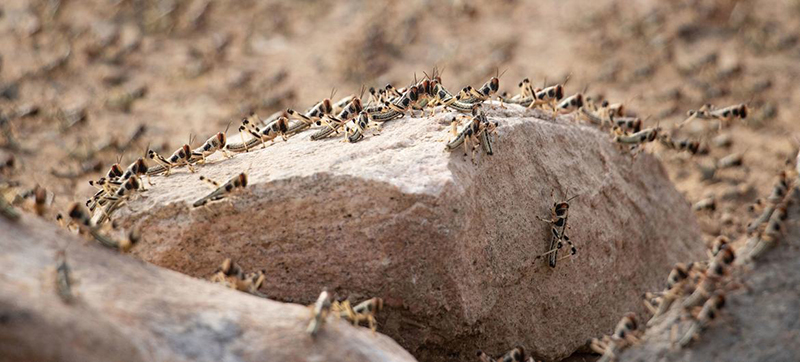
New York: Following heavy widespread rains in Yemen, the Food and Agriculture Organization (FAO) remains on high alert as the threat of desert locust emergence looms, the UN agency said on Wednesday.
To avert losses triggered by the voracious pest, FAO recently delivered various equipment and machinery to the Ministry of Agriculture, Irrigation and Fisheries (MAIF) in Aden.
And under the World Bank funded Yemen Desert Locust Response project, another consignment is expected to be handed over to Sana’a soon.
“The project, together with other interventions we are implementing in the country, demonstrate FAO’s commitment to better nutrition and food security, which is linked to sustainable production and decent livelihoods,” said FAO’s country representative, Hussein Gadain.
Pivotal testimony
Speaking at the handover ceremony, Mr. Gadain described the World Bank-funded project as testimony to FAO’s pivotal role in reducing malnutrition and food insecurity in Yemen through efficient, inclusive, resilient, and sustainable agri-food systems.
“This will ensure healthy diets for everyone in Yemen,” he said.
“Additionally, it is noteworthy that through this project, we intend to improve the infrastructure and strengthen the national capacity for early warning and early response,” he continued, referring to the construction of desert locust control centres and implementation of pesticide management systems.
Building resilience
The project is also designed to build farmers’ resilience to climate-induced locust infestations and improve the country's preparedness and institutional capacity against locust outbreaks.
This will be done by establishing the desert locust network, including desert locust centres in Sana’a and Aden.
Additionally, sub-centres will be constructed in Hadiyah, Shabwah, and Hadramaut.
Critical machinery handover
The machinery that was handed over includes four types of spraying utensils, each targeting a specific type of locust infestation and working under specific conditions.
They can spray Ultra-Low Volume pesticides, which are applied at a rate of one litre per hectare, and can handle both chemical and biological insect repellents.
The machinery includes a vehicle-mounted sprayer for trees and bushes that can treat 100 to 120 hectares a day, motorized knapsack sprayers for smaller infested areas, and a handheld sprayer for small, targeted locust infestations that treats 10 hectares per day.
Protective equipment
Personal equipment for up to 4,000 people – such as overalls, masks, goggles, caps, boots, and gloves – was also handed over to protect operators during pesticide spraying.
Equipment to establish temporary camps for up to 200 people was also provided for remote desert areas during the locust control campaigns, including tents, camping beds, cookware, sleeping bags, water containers, and small generators.
The equipment comes on the back of intensive training with the participation of MAIF staff in Aden, which touched on surveying desert locust; controlling and safely using pesticides; and environmental health and safety on sprayer maintenance.
Funding agriculture restoration
In the face of ever-increasing food and nutrition insecurity in Yemen, the World Bank-funded project is one of FAO’s various interventions to help rebuild and restore agricultural productivity and create livelihood opportunities.
To help achieve this, FAO seeks to raise $50 million to reach 1.5 million vulnerable people in Yemen.
Today, only $28.8 million has been raised.
Support Our Journalism
We cannot do without you.. your contribution supports unbiased journalism
IBNS is not driven by any ism- not wokeism, not racism, not skewed secularism, not hyper right-wing or left liberal ideals, nor by any hardline religious beliefs or hyper nationalism. We want to serve you good old objective news, as they are. We do not judge or preach. We let people decide for themselves. We only try to present factual and well-sourced news.
Support objective journalism for a small contribution.